Six Senses debuts The Yin Way women’s retreat at Kanuhura and Kyoto
The Way of a Woman, led by wellness director Hati S. Malinova, runs at Six Senses Kanuhura in October 2026 and Six Senses Kyoto that December, for a small group each time.
Six Senses has set two dates for The Yin Way Retreat – The Way of a Woman, the first retreat the group has led on women’s health across the whole of adult life. It opens at Six Senses Kanuhura, Maldives, October 1 to 4, 2026, and moves to Six Senses Kyoto, Japan, December 11 to 14, 2026, with a small group of women on each.
The premise is deliberately broad. The programme is built to support women through every life stage, from pre-pregnancy to post-menopause, and it treats those stages as one continuum with shared physiology behind them. Most wellness programming at this level takes a single window — a fertility push, a menopause reset — and works only within it. The Yin Way keeps the whole span in view, which shapes what four days can sensibly attempt: realigning the nervous system, restoring emotional equilibrium, and blending modern science with older practice rather than choosing between them.
Leading both retreats is Hati S. Malinova, Six Senses Wellness Director and Integrative Health Expert. She brings more than two decades in female and reproductive health, postpartum and family wellbeing, including 12 years at a female health hospital in Shanghai. That hospital grounding is the substance here: clinical experience of women’s bodies at scale, informing the language she gives the retreat. “The Yin Way is the feminine way,” Malinova says. “It is about moving with your body instead of pushing against it.”
The framework comes from Traditional Chinese Medicine and Taoist philosophy: the ‘Yin’ principles of rest, receptivity, reflection and cyclical living. Two ideas do most of the work. The first is cyclicality — the assumption that a woman’s energy, appetite and capacity move in patterns worth reading. The second is the TCM notion of perimenopause and menopause as a ‘second spring’, a reframing that treats the years after fertility as their own opening. It is a useful counterweight to a wellness vocabulary that has long described that decade in terms of loss.
The wider context Six Senses cites is a data problem. Drawing on the Global Wellness Institute, the group points to a shift away from women’s wellbeing being extrapolated from men’s data and protocols — the long-standing habit of taking research conducted on male bodies and applying it, unadjusted, to female ones. Hotel wellness has inherited that habit along with everything else. A retreat designed from female physiology outward, by someone who has spent a career in it, is a meaningful correction at this end of the market.
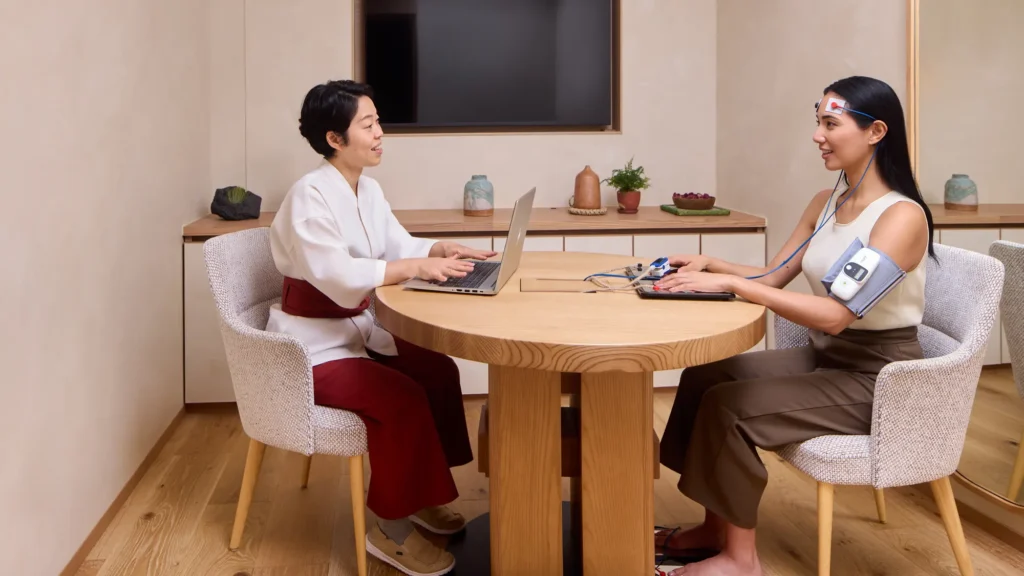
Practically, each retreat begins with an integrated wellness screening on arrival, so the days that follow are calibrated to the individual guest. Sleep With Six Senses and Eat With Six Senses principles run through the programme, giving continuity to the two things that determine whether any short reset holds. Treatments include lymphatic drainage for hormonal balance and heat therapies, with the stated targets being cortisol regulation, cycle balancing, circadian rhythms and sleep — measurable, unglamorous ground, and the right ground for a four-day stay.
The Essentials
- RETREAT
- The Yin Way Retreat – The Way of a Woman
- MALDIVES
- Six Senses Kanuhura, October 1 to 4, 2026
- JAPAN
- Six Senses Kyoto, December 11 to 14, 2026
- LED BY
- Hati S. Malinova, Six Senses Wellness Director and Integrative Health Expert
- FRAMEWORK
- The ‘Yin’ principles of rest, receptivity, reflection and cyclical living, drawn from Traditional Chinese Medicine and Taoist philosophy
- GROUP SIZE
- A small group of women on each retreat
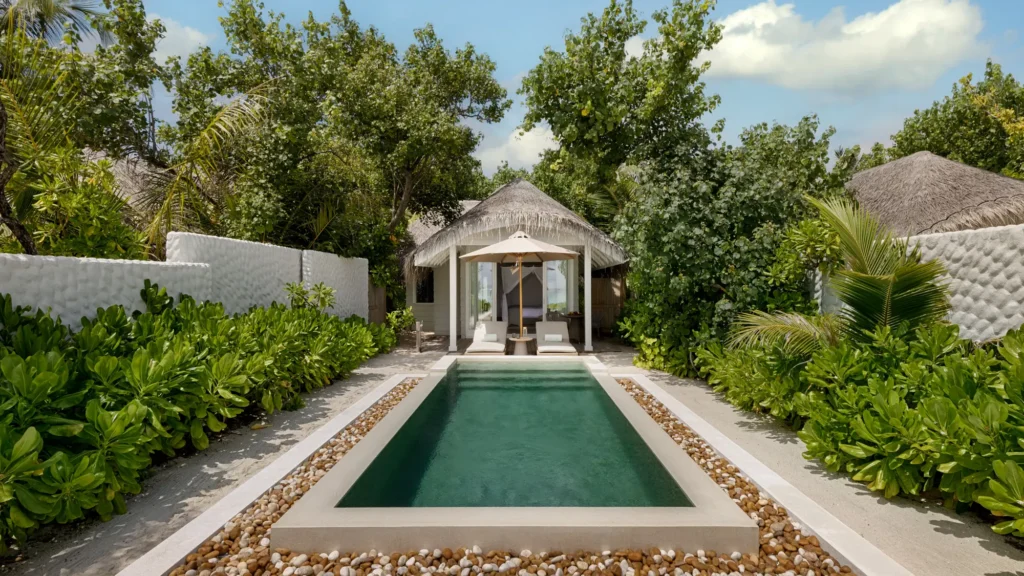
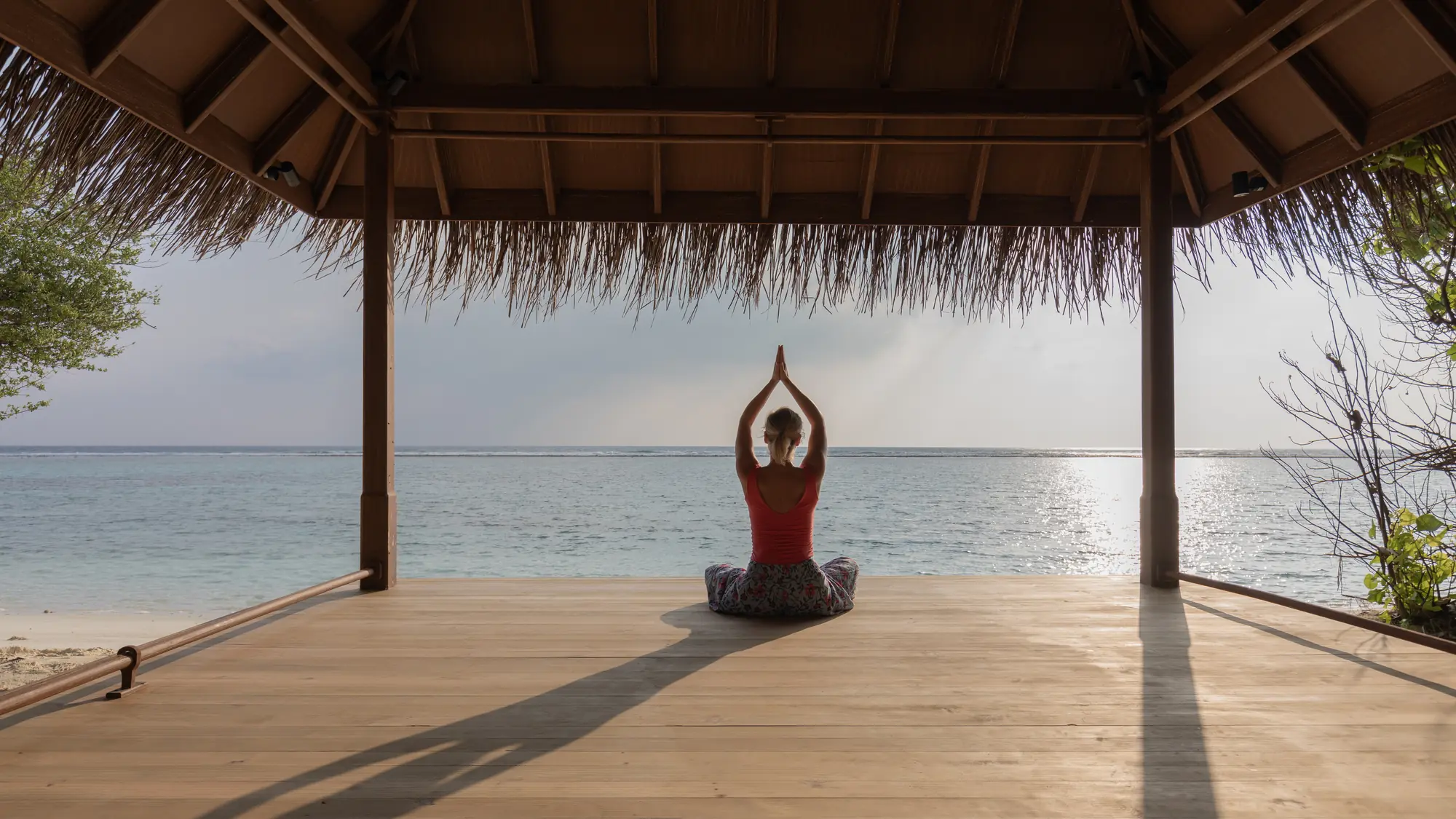
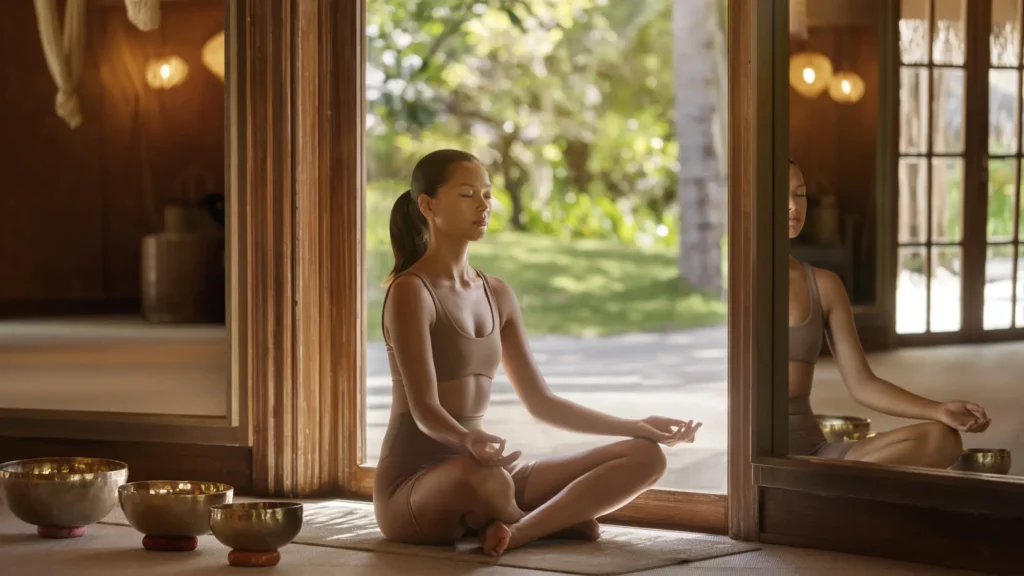
The two settings give the programme two distinct characters. At Kanuhura, the rhythm is daily yin yoga and sound healing, hormonal health workshops, and botanicals at the Alchemy Bar, with a dolphin cruise built into the days on the water. Guests stay in Beach Villas with private pools, which matters more than it sounds on a retreat organised around rest and receptivity: privacy is part of the treatment, and a villa you can retreat into between sessions is doing quiet work.
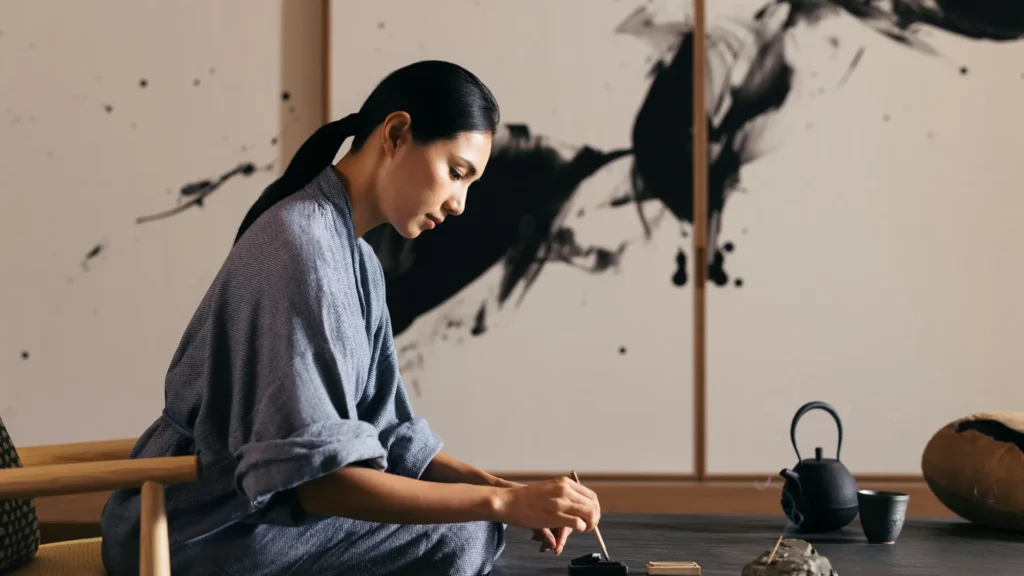
Kyoto turns inward and gets more tactile. The programme there draws on kintsugi, the repair of broken ceramics with visible seams of gold, and ikebana, alongside qigong and Daoist meditation. The hotel’s labyrinth gives the walking meditation a fixed home. For anyone drawn to the philosophical half of the framework, Kyoto is the stronger fit; Kanuhura suits those who want the reset carried by water, heat and open air. Both are led by Malinova, so the clinical content travels.
What a discerning traveller should know: the group size is small on both dates, and the two sit ten weeks apart in the calendar, which makes them alternatives to choose between well ahead of time. The arrival screening rewards guests who come with recent bloodwork and a clear sense of their own history to hand. And because the programme addresses a lifecycle, it is worth being honest at booking about which part of that lifecycle you are in — the four days are shaped around the answer.