Destination Guide
Bali
Temples at dawn, terraced rice and reef breaks — a slow, opinionated guide to the things worth doing across Bali, and the crowds worth avoiding.
At first light above Jatiluwih, the rice terraces hold the mist like water in a cupped hand, and the only sound is a farmer’s hoe and a rooster two valleys over. Bali welcomed roughly 16.4 million domestic and international visitors in 2024, yet up here, at that hour, you would never guess it — and that contradiction is the truth of the place: the best things to do in Bali are often a short, deliberate drive from the crowds rather than inside them.
This is a destination guide written the way we like to travel: slowly, with a strong point of view, and a willingness to say when something is worth your morning and when it is not.
-
Sunrise over the rice terraces
The thousand-year-old subak landscape at Jatiluwih, before the coaches.
-
Temples and ceremony
Tirta Empul’s holy spring and Uluwatu’s clifftop kecak at dusk.
-
Surf and beach clubs
The dark-sand breaks and long lunches of Canggu and Seminyak.
-
A day on the Nusa Islands
Penida’s cliffs and Lembongan’s manta rays, on an early boat from Sanur.
-
The cool north
Munduk’s waterfalls, crater lakes and coffee country.
An island, honestly
Bali is small on a map and enormous in practice. The south is busy, glossy and occasionally exhausting; the centre is cultural and green; the east and north are where the island still breathes. A few honest notes before you plan:
- The south is over-touristed. Seminyak, Canggu and Kuta are wonderful for food and surf, but the traffic is genuinely bad and getting worse.
- Distances lie. Forty kilometres can take two hours. Cluster your days by region rather than dashing across the island.
- Ceremony comes first. Temple days, processions and offerings are not performances for visitors; they are daily life, and they deserve patience.
- There is now an entry levy. Foreign arrivals pay a mandatory tourism contribution, which we cover further down.
For official background on regions, festivals and practicalities, Indonesia’s Wonderful Indonesia site is the most reliable starting point.
Ubud and central Bali
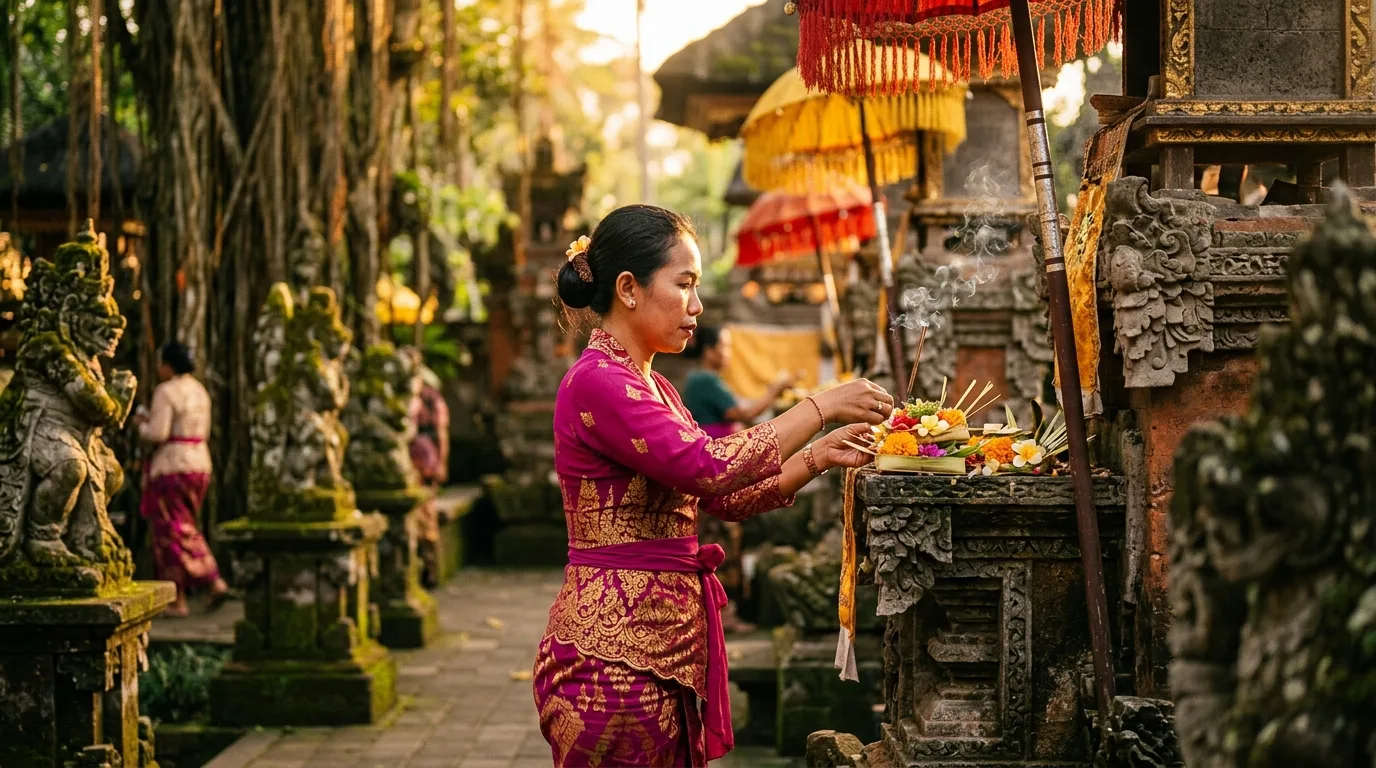
Ubud is the cultural centre, and for all the talk of it being ruined, the town still rewards anyone who gets up early and walks. By nine the coaches arrive; by seven the place is yours.
Start with the rice terraces. Tegallalang is the famous one and the most photographed — which means it is also the most crowded and commercialised, with swings and selfie frames cluttering the view. We prefer the broader, working landscape of Jatiluwih, part of the UNESCO-listed subak cultural landscape, where the irrigation system is a thousand years old and the terraces stretch to the treeline rather than a ticket booth.
Temples worth the effort
Central and eastern Bali hold the temples that justify the cliché about the island of a thousand of them. Tirta Empul, the water temple near Tampaksiring, is a working purification site where Balinese families queue to bathe in the spring; arrive before the tour groups and dress respectfully. Gunung Kawi, with its rock-cut shrines down a green ravine, is one of the most atmospheric walks on the island. Goa Gajah, the so-called Elephant Cave, is smaller and busier but easy to fold into a morning.
Eating and staying in the hills
Ubud’s food has grown up — warungs serving babi guling that have not changed in decades, and immersive tasting menus built around fermentation and foraged greens. For the kind of design-led stay the area does well, our review of The Purist Villas, a Relais & Châteaux retreat in Ubud, covers the private bamboo pool villas and jungle quiet; for somewhere more secluded again, the hillside villas at Ubud Valley sit above a ravine with little around them but birdsong. To wake up among the rice fields themselves, our Visesa Ubud review covers a good-value five-star resort three kilometres north of town, with working paddies, an organic farm and a Balinese cooking class on the grounds.
Seminyak and Canggu
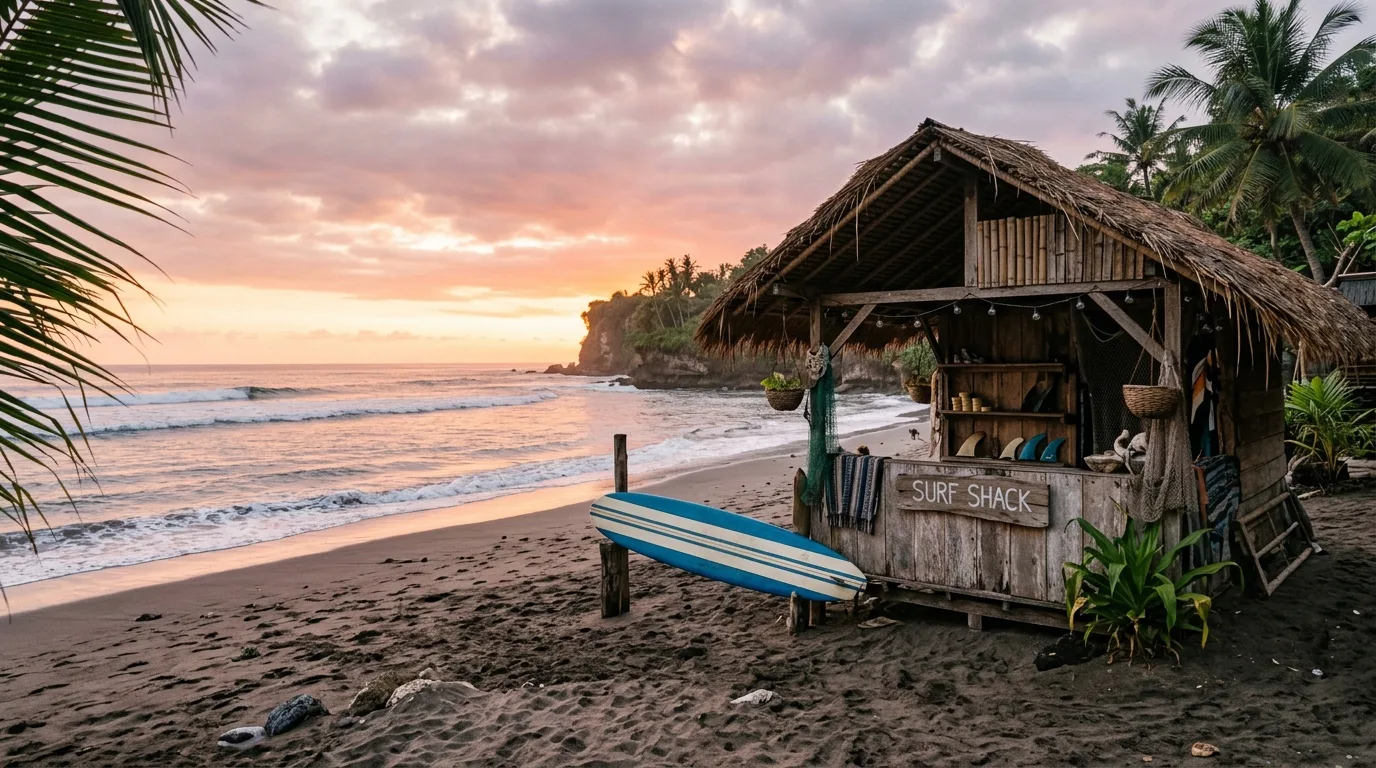
If you came to Bali to eat well and watch the sun fall into the sea with a drink in hand, this is your stretch. Seminyak is the polished older sibling; Canggu is younger, scruffier and full of motorbikes, surf and flat whites. The beaches here are for sunsets and surf schools rather than swimming — the sand is dark, the current is real, and the lifeguard flags matter. Beginners do well at Batu Bolong and Echo Beach in Canggu, where the waves are forgiving and the line-ups social.
Where the food earns its reputation
This is the island’s most exciting eating, full stop, from open-air cafés serving cold-pressed everything to candlelit tasting menus. For an unfussy, colourful brunch, our visit to The Mocca café in Canggu is a fair guide to the genre; down towards Legian, a poolside lunch at Big Fish Bar & Grill mixes Western plates with Balinese cooking. The shortcoming is the obvious one: Canggu’s growth has outpaced its roads, and an evening crossing of a few kilometres can swallow an hour. Plan dinners close to where you sleep.
Uluwatu and the Bukit
The Bukit Peninsula, the limestone hook at the island’s southern tip, feels different from the rest of Bali: drier, higher, with white-sand beaches at the foot of dramatic cliffs. This is where the surf turns world-class and where some of the most considered new hotels have opened. Pura Luhur Uluwatu, the sea temple on the cliff edge, is the set-piece — go for late afternoon, watch the kecak fire dance as the light goes, and keep a firm hold of your sunglasses, because the resident macaques are practised thieves.
Beaches and surf on the Bukit
Padang Padang, Bingin and Dreamland are the names surfers chase, with reef breaks that are not for beginners. For sheer scenery, Pandawa Beach sits below tall carved cliffs and stays calmer than most. For a slow afternoon by the water, our day at the Roosterfish Beach Club near Pandawa covers the day beds and ocean views; for a base, our Renaissance Bali Uluwatu review walks through the open-air architecture and one of the better hotel breakfasts on the island. Those still hunting solitude will appreciate our account of finding one of Bali’s quieter, harder-to-reach beaches.
Nusa Dua: calm water and grand resorts
Just east of the Bukit, Nusa Dua is the manicured resort enclave, with gentle swimming beaches and a row of large hotels. It is not the real Bali and does not pretend to be, but for a few easy days of pool and spa it works. Our reviews of the lagoon-pool rooms at the Sofitel Bali Nusa Dua and the ocean-front grandeur of The Apurva Kempinski give a sense of the area’s register.
Sidemen and east Bali
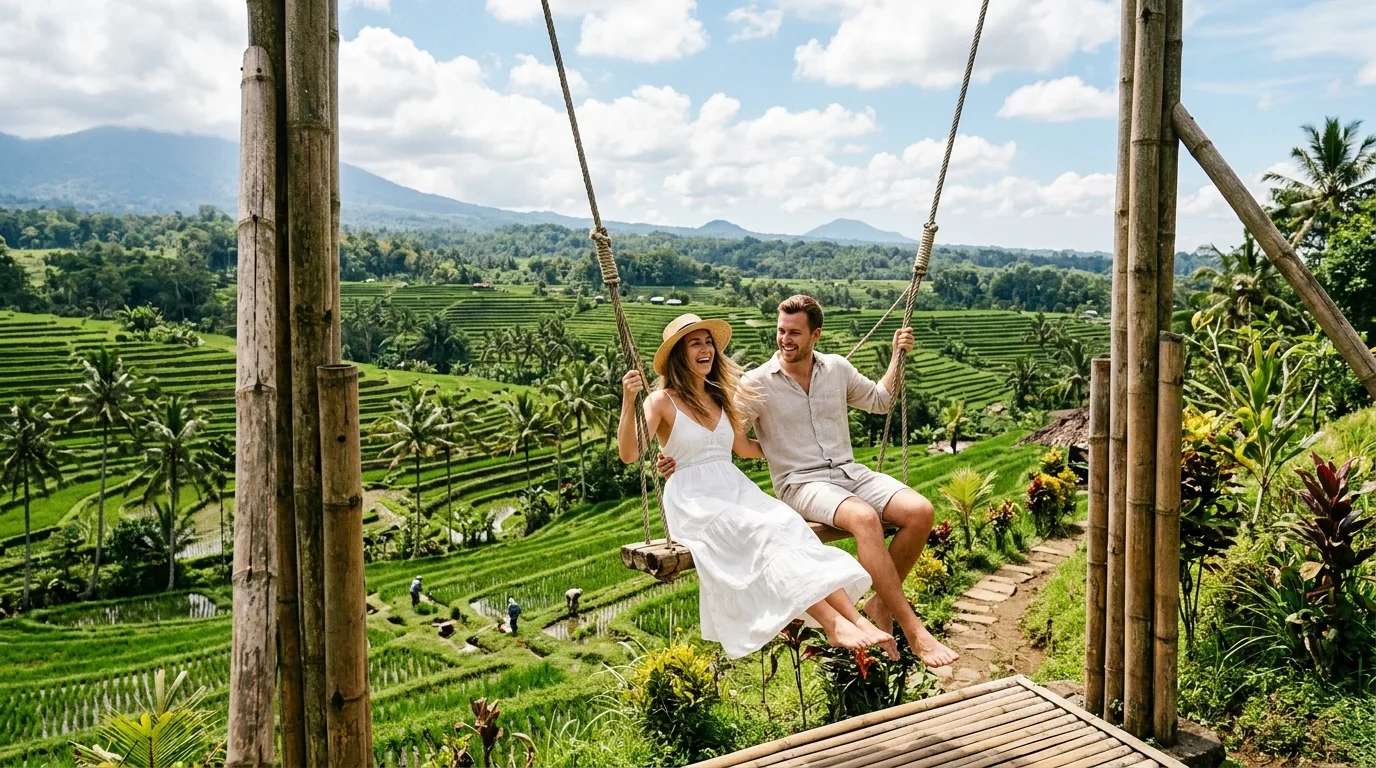
If the south has worn you down, drive east. Sidemen is the Ubud of twenty years ago: rice terraces falling away beneath Mount Agung, weaving villages, and barely a beach club in sight. This is walking country — hire a local guide and spend a morning crossing the paddies and irrigation channels, stopping where someone is making songket cloth on a backstrap loom.
The eastern temples and water palaces
Pura Besakih, the Mother Temple, sits high on Agung’s slopes and is the most important Hindu site on the island; recent visitor management has tidied the experience, though it remains busy on ceremony days. Lower down, the royal water palaces at Tirta Gangga and Taman Ujung are gentle, photogenic places to spend a slow hour among carp ponds and stepping stones. East Bali’s coast around Amed and Tulamben is for divers and snorkellers, with the wreck of the USAT Liberty drawing people into the water at dawn.
Around 390 spas now operate across Bali, and the island’s wellness industry has grown by roughly 160% since 2003 — which is why a serious massage or yoga practice is never far from wherever you stay.
The Nusa Islands
Off the south-east coast, the three Nusa islands — Penida, Lembongan and Ceningan — are reached by fast boat from Sanur in about forty minutes. Nusa Penida is the dramatic one, all sheer cliffs and impossibly blue coves. The famous viewpoints, Kelingking Beach with its T-rex headland and the natural pool at Angel’s Billabong, are genuinely spectacular and genuinely crowded, and the island’s roads are rough.
The descent to Kelingking’s sand is steep and not for everyone, and the swimming holes can turn dangerous at the wrong tide. Check conditions, and don’t let a photograph talk you past your limits.
How to do the Nusa Islands well
Go for two nights rather than a rushed day trip. Stay on quieter Lembongan, snorkel with manta rays in the morning before the boats arrive, and cross the yellow bridge to Ceningan for the blue lagoon at lunch. The early start is the price of admission, but the islands at dawn, before the day-trippers land, are among the most rewarding things to do in Bali.
Munduk and the north
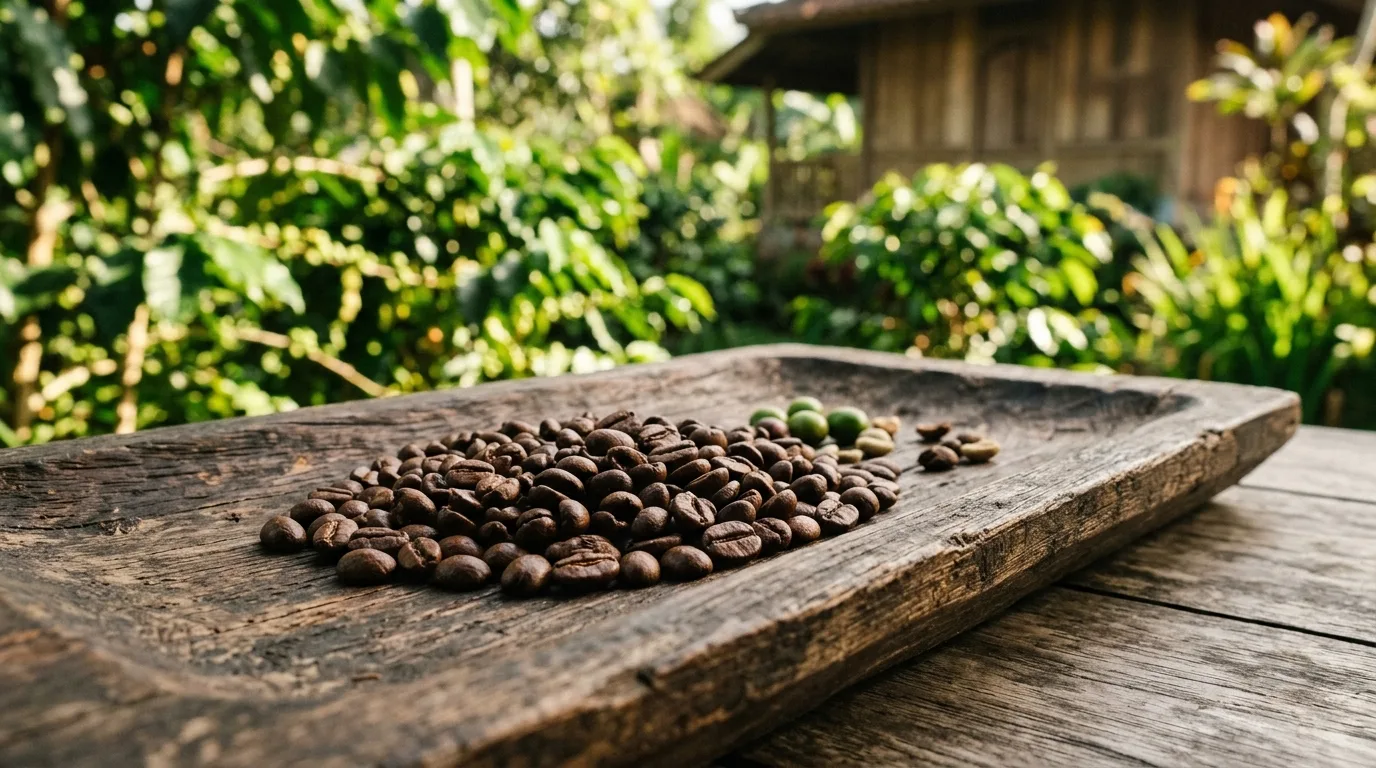
North-central Bali climbs into coffee and clove country, where the temperature drops, the mornings are misty, and waterfalls thread through the forest. Munduk is the base, and it is a different island up here: cooler, greener, slower. The waterfalls of Munduk and Banyumala reward a short trek through the trees, and the twin crater lakes of Buyan and Tamblingan are best seen from the ridge walk between them. Pura Ulun Danu Bratan, the temple that appears to float on Lake Bratan, is the postcard of the north — worth the early arrival before the light flattens and the buses fill the car park.
Coffee, cool air and nature stays
This is the part of Bali where a fire in the evening makes sense. Our review of the Munduk Moding Plantation nature resort covers the working coffee estate, the infinity pool above the clouds, and the kind of quiet the south simply cannot offer. The north takes effort to reach, and that effort is exactly why it stays calm.
Wellness, ceremonies and culture
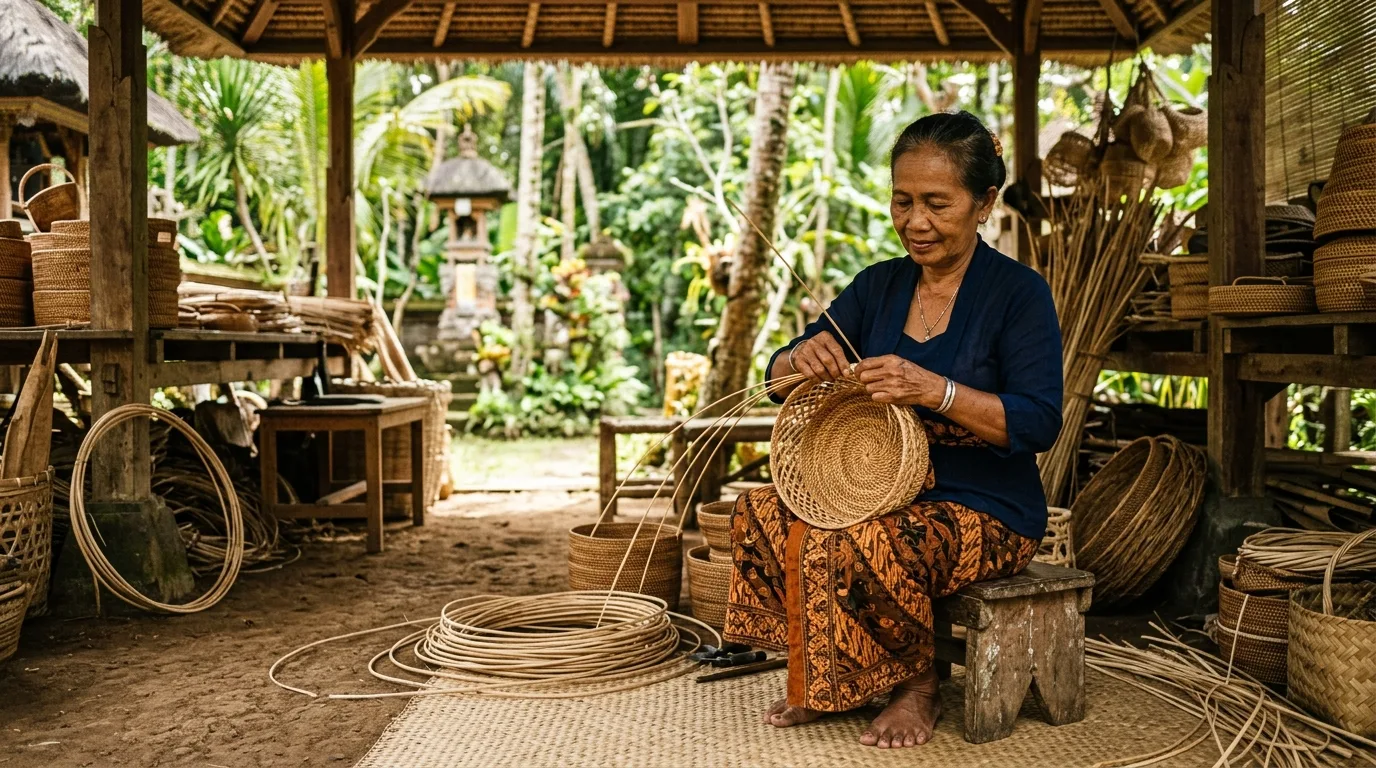
Wellness is not a marketing layer in Bali; it is woven into how the place runs. The daily offerings — the canang sari laid on doorsteps and dashboards — set a rhythm, and the calendar is full of temple anniversaries and processions that will, sooner or later, stop your car. Wait, watch, and consider yourself fortunate rather than delayed. The wellness scene is genuinely good value: a yoga class at a studio such as The Yoga Barn starts around IDR 165,000, and a thirty-minute massage can begin near IDR 60,000, which makes a daily ritual entirely reasonable.
Watching a ceremony respectfully
If you pass or are invited to a temple ceremony, the etiquette is simple: wear a sarong and sash, do not stand higher than the priest, never point your feet at the shrine, and keep your camera low and quiet. These are sacred days, and the courtesy matters more than the photograph.
Best time to visit and getting around
Bali has two seasons. The dry season, roughly April to October, brings reliable sunshine, the cleanest surf on the west coast, and the busiest months of July and August. The wet season, November to March, is greener and quieter, with warm downpours that usually clear by afternoon. Our favourite windows are the shoulder months of May, June and September, when the weather holds, the crowds thin and rates settle.
Foreign arrivals now pay a one-off tourism levy of IDR 150,000 (about USD 10), which funds environmental conservation and infrastructure across the island.
The levy and the practicalities
Pay the tourism contribution online before you fly through the official Love Bali levy portal to save queueing on arrival, and keep the QR code on your phone.
Getting around the island
There is no train and little useful public transport, so getting around comes down to a few choices:
- Private driver: the civilised option for touring, often around IDR 700,000–900,000 for a full day, local knowledge included.
- Ride-hailing apps: Grab and Gojek work well in the south for short hops and are far cheaper than negotiating.
- Scooter: liberating and how locals move, but the traffic is unforgiving — only ride if you are experienced and insured, and wear the helmet properly.
One avoidable disappointment deserves a flag. The pre-dawn Mount Batur sunrise trek is heavily marketed and, on a busy morning, can mean a procession of head-torches and a crowded summit. If you want a volcano view without the queue, the rim at Kintamani at sunrise gives most of the reward for none of the climb.
A note on temples and tides
Sea temples like Tanah Lot have their own visiting hours, ceremony schedules and dress requirements; the official Tanah Lot visitor site is the place to confirm tide times, since the temple is only reachable on foot at low water.
The short version
The mistake most first visitors make is trying to see all of it. The better approach is to choose two or three regions, give each a few unhurried days, and let the island set the pace through its ceremonies, its tides and its afternoon rain. Done that way, the finest things to do in Bali are not a checklist but a sequence of mornings: a temple before the crowds, a long lunch by the water, a waterfall walk in the cool north, a sunset from a cliff.
Frequently asked questions
What are the best things to do for first-time visitors?
Pair the cultural centre around Ubud — temples and rice terraces — with a few days on the Bukit Peninsula for clifftop temples, beaches and surf. Add one slower region, such as Munduk in the north or Sidemen in the east, to balance the busier south.
How many days do you need?
Seven to ten days lets you cover two or three regions without rushing, allowing for traffic and the island’s deceptive distances. Many travellers split their time across two or three bases.
Is Bali too crowded in 2026?
The southern belt of Seminyak, Canggu, Kuta and the famous Nusa Penida viewpoints can be genuinely crowded, and traffic is the main frustration. The east, the north and early mornings almost anywhere remain calm — so crowding is a matter of where and when you go.
What is the best time of year to visit?
The dry season from April to October offers the most reliable sunshine, with July and August busiest. The shoulder months of May, June and September give the best balance of weather, thinner crowds and sensible rates.
Do I have to pay a tourist tax?
Yes. Foreign arrivals pay a one-off levy of IDR 150,000 (about USD 10), which supports conservation and infrastructure. Pay it in advance through the official Love Bali portal to avoid queuing.
What should I avoid doing?
Avoid disrespecting temple etiquette, swimming where lifeguard flags warn of currents, and over-packing your itinerary across regions in a single day. The heavily marketed Mount Batur sunrise trek can also be crowded — weigh it against quieter viewpoints like Kintamani.
Is Bali good for a wellness trip?
Very much so. With around 390 spas, abundant yoga studios and a strong shift towards private pool villas, Bali suits anyone curating a restful, wellness-led escape, and the cost of daily rituals remains modest by international standards.
Luxe & Found
More from Bali, in your inbox.
New openings, fresh reviews and where we’d go next. One email a week.