Destination Guide
Katong & Joo Chiat
Pastel shophouses, a laksa worth arguing over, and the Peranakan inheritance Singapore still keeps in daily use — a slow guide to the Katong and Joo Chiat quarter.
By nine in the morning the coffee is already going at Chin Mee Chin, kaya toast pressed on a griddle that has been warm, in one form or another, since 1925, and the marble-topped tables fill with a mix of old Katong families and people who have crossed the island for the ritual. This eastern quarter — Katong along the coast road, and the tighter grid of Joo Chiat that runs inland from it — is where Singapore keeps its Peranakan inheritance in something close to daily use, rather than behind museum glass. The shophouses are still lived in, the kueh is still steamed to order, and the laksa is still argued over.
It is not a checklist to be sprinted through. Half a day covers the set-pieces; a full one leaves room to sit down and eat properly, which is rather the point. What follows is an opinionated walk through the streets, the food and the crafts worth slowing for — and an honest note on what the heritage marketing tends to leave out.
-
Walk Koon Seng Road early or late
The pastel shophouse row is the reason people come — go outside midday to dodge the heat and the crowd.
-
Sit down for Peranakan cooking
Ayam buah keluak and babi pongteh show a range one bowl of laksa never can.
-
Book a beading session at Rumah Bebe
Learn kasut manek — Peranakan beaded slippers — from a working practitioner rather than just browsing.
-
Detour to Sri Senpaga Vinayagar Temple
A Dravidian gopuram on Ceylon Road, and a reminder the quarter was never a single story.
-
Visit The Intan over the national museum
A private, appointment-only Peranakan home gives a more intimate sense of the culture than any exhibit case.
The shophouses
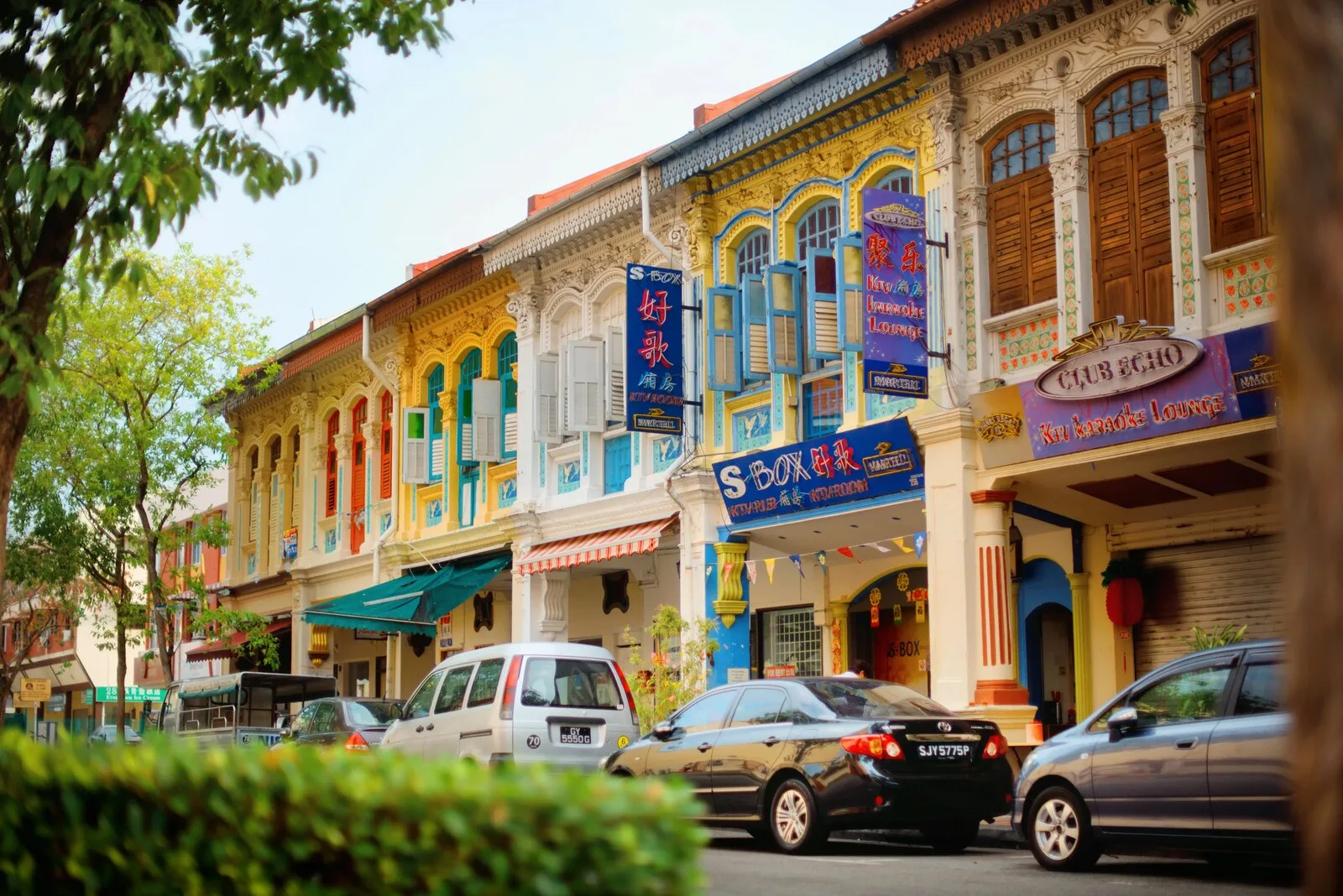
The set-piece everyone photographs is Koon Seng Road: two- and three-storey shophouses from the 1920s and 30s in pastel greens, pinks and blues, their façades a Peranakan-Chinese mix of ceramic floral tiles, carved eaves and pintu pagar — the half-height swing doors that let a breeze through while the main door stays shut. It is genuinely lovely, and at weekends it is genuinely crowded. The reward for going a little further is the wider grid: Joo Chiat Road itself, longer and less polished, where restored frontages sit among hardware shops and old karaoke lounges; and the quieter runs of Joo Chiat Place, Joo Chiat Terrace and Ceylon Road. More than eight hundred buildings here are conserved; the area was gazetted a conservation area by the Urban Redevelopment Authority in 1993, and in 2011 the National Heritage Board named Joo Chiat Singapore’s first Heritage Town. A word to the wise: many of these shophouses are private homes, so keep your voice down on the residential stretches, and don’t treat someone’s front step as a studio.
A creole inheritance
The word Peranakan describes not a bloodline but a Straits-born, creolised identity — the descendants of Chinese immigrants who, from the fifteenth century onward, intermarried with local Malay communities and built a culture of their own, the men Babas, the women Nyonyas. Katong and Joo Chiat became their heartland from around 1900, as families moved out from the crowded city centre to the eastern fringe and built the houses that survive today. What the heritage branding tends to flatten is that the quarter was never mono-cultural: a substantial Eurasian community grew up around its Catholic churches and schools, and Ceylon Road takes its name from the Ceylonese Tamils who settled there in the nineteenth century. It is a mixed neighbourhood wearing a Peranakan coat, and the truer story is the more interesting one. The Singapore Tourism Board’s own precinct guide is a sound place to start planning; the National Heritage Board recognises both Peranakan cuisine and laksa as Intangible Cultural Heritage, and in 2024 made Katong-Joo Chiat the site of its first Heritage Activation Node, with guided trails and workshops run alongside community partners.
The laksa question
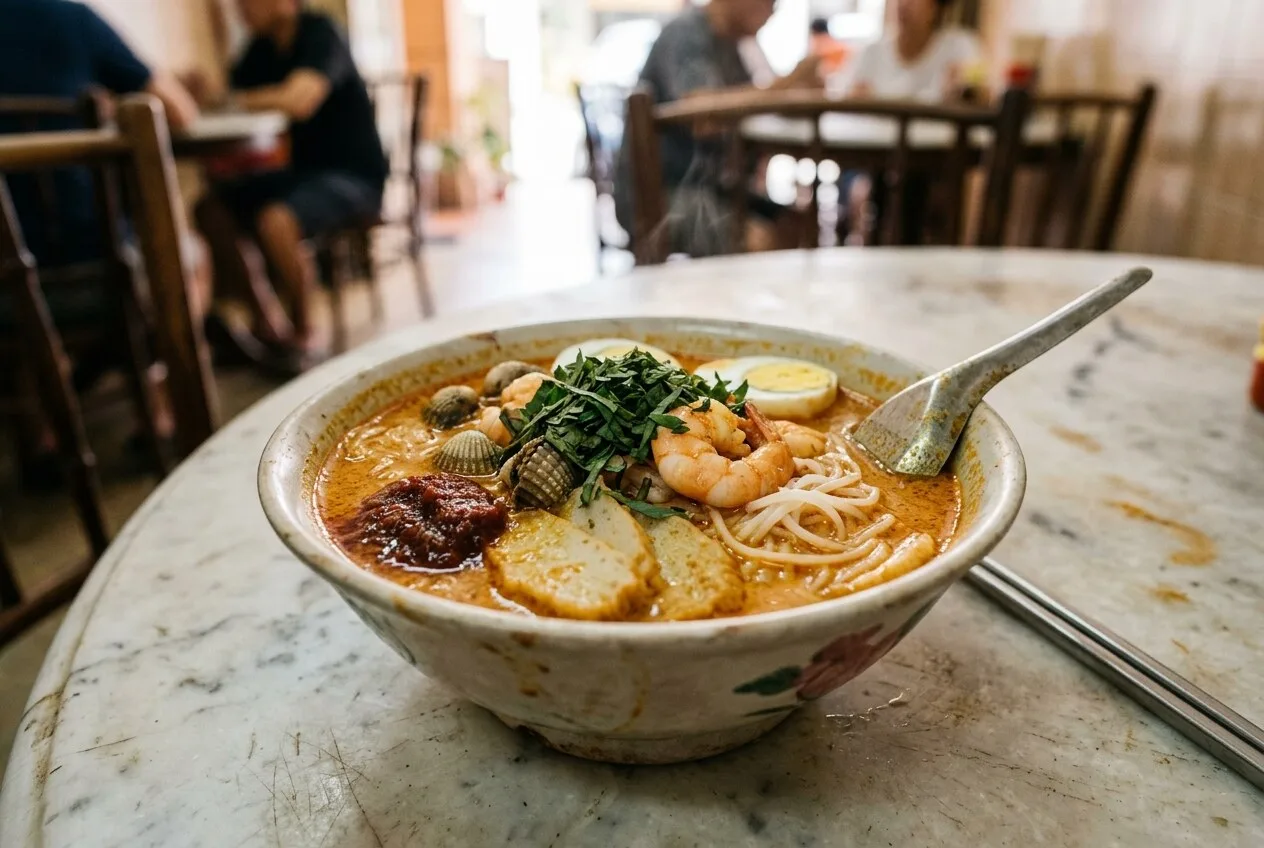
Katong laksa is a thing apart: a coconut-milk gravy loosened with dried-shrimp stock, poured over rice vermicelli cut short enough to eat with a spoon alone, and finished with cockles, prawns, fishcake and a scissored heap of laksa leaf. The local rivalry over who serves the original is real, and it is not merely food-press colour — the tourism board’s own map lists two separate, still-trading claimants a few doors apart on East Coast Road, 328 Katong Laksa and The Original Katong Laksa. The fuller backstory, of feuding proprietors and celebrity-chef showdowns, is the stuff of local legend rather than settled fact; I would take it with the same pinch of salt you’d add to the bowl. Order at both, a few minutes apart, and decide for yourself. That is the only honest way to settle it.
A Peranakan table
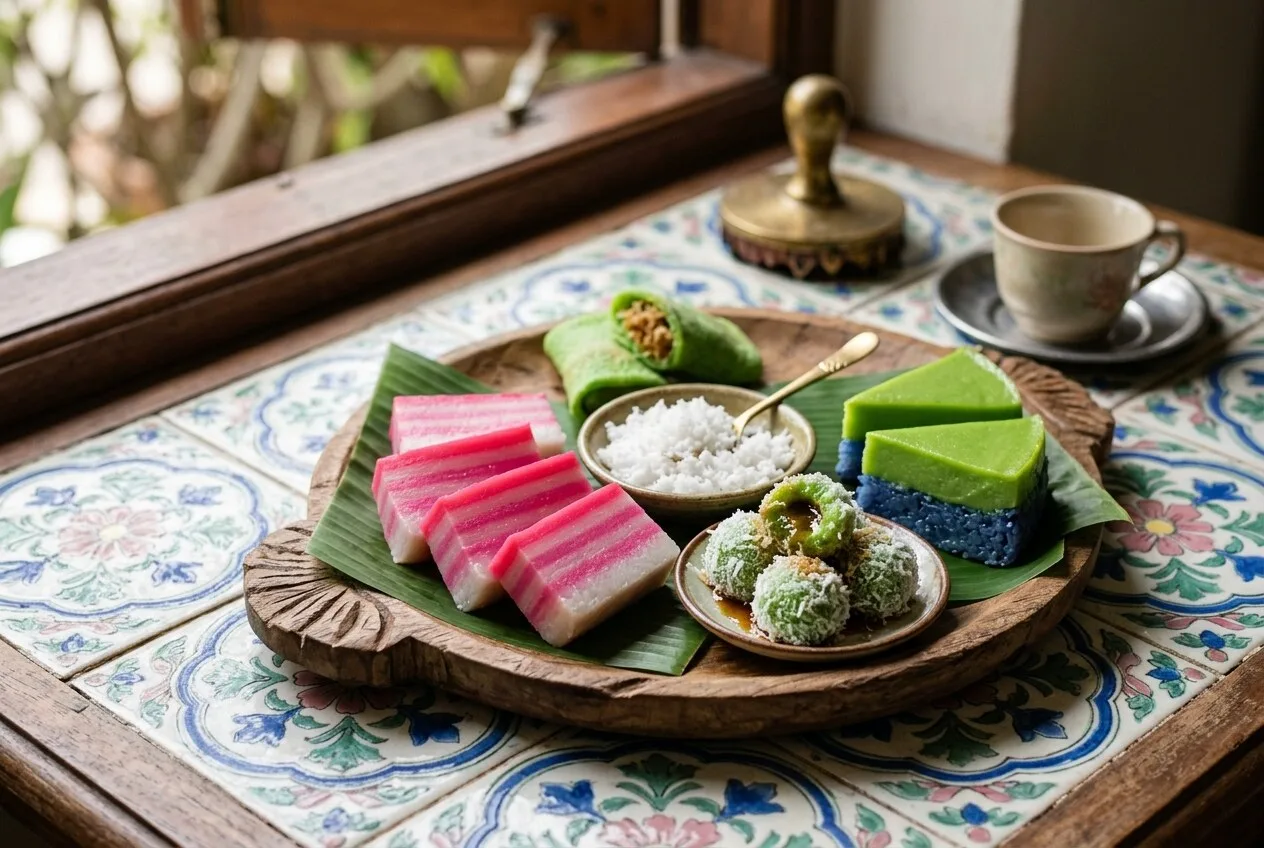
Laksa is the gateway, not the whole cuisine. The dishes to seek out are the slow ones: ayam buah keluak, chicken stewed with the black, faintly bitter buah keluak nut and tamarind; and babi pongteh, pork braised with fermented soybean paste until it falls apart. For a proper sit-down inside the quarter, Chilli Padi Nonya Restaurant on Joo Chiat Place and Baba Chews, in the handsomely converted old Joo Chiat police station, both do the repertoire justice. For the older, plainer pleasures, Chin Mee Chin Confectionery has been a Hainanese kopitiam on East Coast Road since 1925 — kaya toast, soft-boiled eggs, coffee — and Kim Choo Kueh Chang, founded in 1945, is the place for rice dumplings and a box of jewel-coloured nonya kueh to carry off. One correction worth making, since guidebooks blur it: Candlenut, Singapore’s Michelin-starred Peranakan kitchen, is over in Dempsey, not here — a separate outing, not a Katong lunch.
Singapore’s National Heritage Board lists both Peranakan cuisine and laksa on its national inventory of Intangible Cultural Heritage — the recipes are formally recognised, not just fondly remembered.
Craft, and the shops that keep it
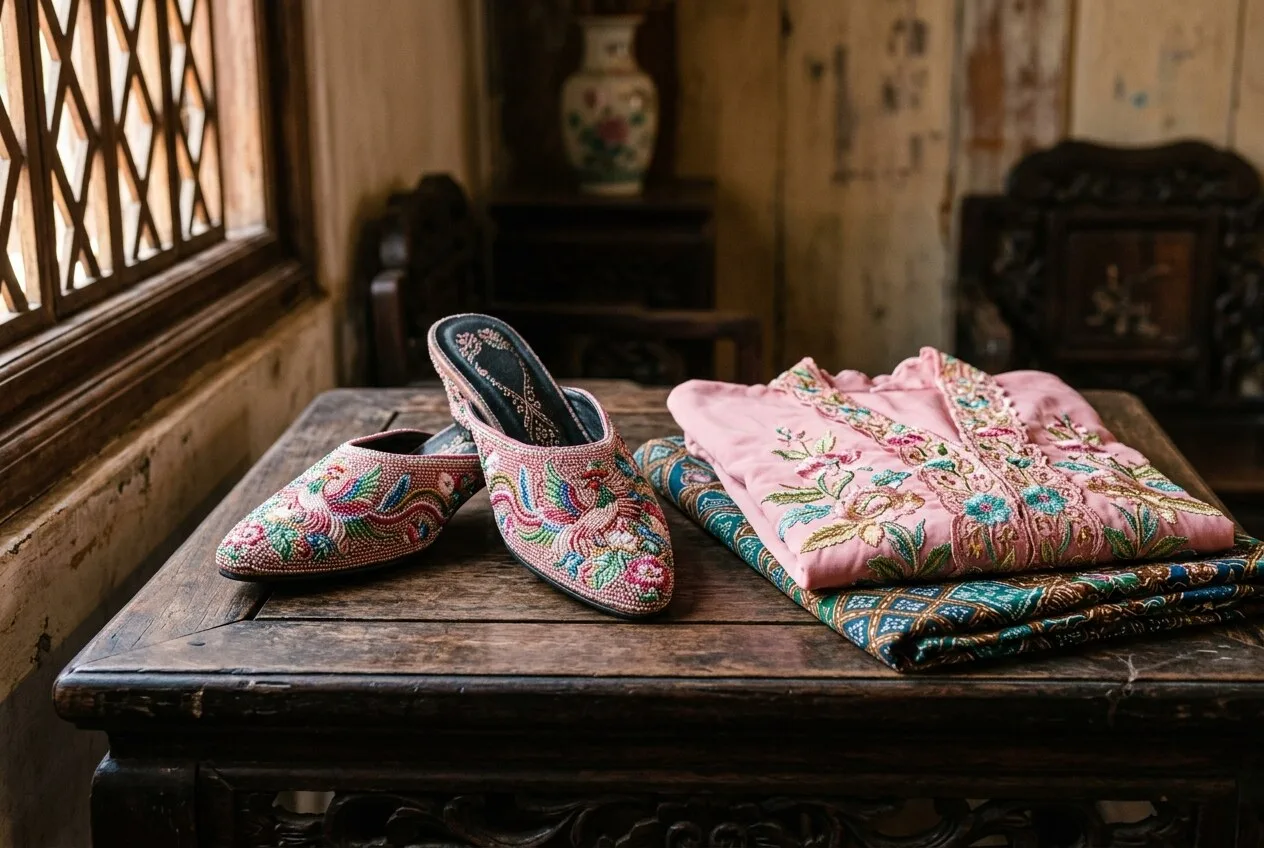
The anchor is Rumah Bebe, a 1928 shophouse on East Coast Road restored by the beadwork specialist Bebe Seet, who sells sarong kebaya and beaded slippers — kasut manek — and, better still, teaches the beading in classes you can book ahead of a visit. A short walk away, The Intan on Joo Chiat Terrace is a private, appointment-only home-museum of Peranakan objects, and to my mind a more intimate encounter with the culture than the formal galleries in town. Kim Choo keeps the old craft of hand-making popiah skins alive; Cat Socrates carries a well-judged range of local design. Two honest caveats: opening hours in the quarter shift, and several of these places open only part of the week or by appointment, so call before you set out — and yes, the enclave is gentrifying, with a share of the conserved shophouses now given over to chain cafés and boutiques. It remains, on balance, one of the least manufactured heritage districts in the city; it is simply not frozen in amber.
The other Katong
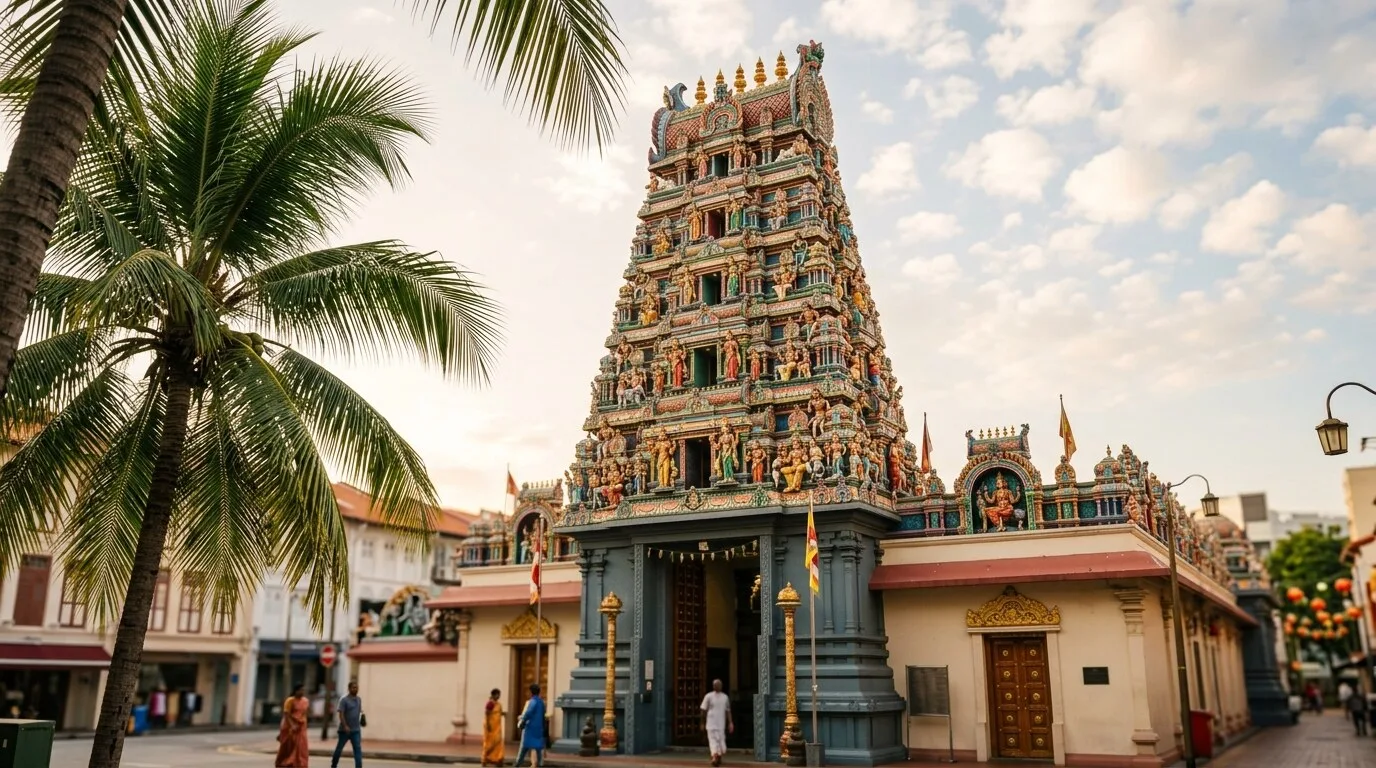
On Ceylon Road stands Sri Senpaga Vinayagar Temple, whose origins reach back to the 1850s, when a Vinayagar — Ganesha — statue was found by a pond beneath a senpaga tree. The Singapore Ceylon Tamils’ Association has looked after it for a century; the present structure was completed around 1930 and rebuilt after wartime damage in 1955, and the tourism board calls it Singapore’s second-oldest Hindu temple. Its tiered gopuram, crowded with painted deities, is routinely skipped by itineraries fixed on the Peranakan story — which is precisely the reason to make the short detour. If you visit, remove your shoes, cover your shoulders and knees, and ask before photographing worshippers.
| Question | Short answer |
|---|---|
| The defining things to do? | Koon Seng Road, a Peranakan sit-down lunch, a bowl of Katong laksa, a beading session at Rumah Bebe, and Sri Senpaga Vinayagar Temple. |
| How long do I need? | Half a day for the highlights; a full day if you want to sit down and eat properly. |
| Where’s the “real” laksa? | There is no single answer — two rival stalls on East Coast Road both claim it. Try both. |
| Is the Peranakan Museum here? | No — it’s in the Civic District on Armenian Street, a taxi ride away. Plan it separately. |
When to go, and getting there
Singapore has no dry season, only wetter and drier weeks. December is the wettest month and February the driest, and the island records rain on around 171 days a year — so carry an umbrella whatever the date. Heat and humidity are the constants, daily temperatures running from the mid-twenties to the low thirties, and a late-morning-to-mid-afternoon walk broken by a long, air-conditioned lunch beats a march through the midday sun. The one genuine friction is arrival: no MRT station sits inside the historic core.
The nearest stations — Eunos, Paya Lebar, Dakota, and the newer Marine Parade, which opened in June 2024 — each leave a ten- to fifteen-minute walk into the quarter. From the city centre a taxi or ride-hail is the simplest option, and worth it in the heat.
Where to stay
Katong is residential at heart, and most visitors base themselves in the city and come east for the day. A handful of boutique stays sit within or beside the quarter for those who want to wake up to it; for the properties we’ve stayed in and rated across Singapore, our reviews are gathered below.
The short version
The best of Katong and Joo Chiat is not a dash between photo stops. It is a slow morning of kaya toast and coffee, a walk along Koon Seng Road before the heat sets in, a sit-down plate of buah keluak, and an hour with a beading needle or in a stranger’s beautifully kept Peranakan house. Come late morning, eat well, accept that you’ll need a taxi to reach it, and let the quarter reveal itself at the pace it keeps.
Frequently asked questions
Is Katong/Joo Chiat worth leaving Marina Bay for?
Yes, if you’d rather spend time in one unhurried, walkable neighbourhood than tick off landmarks. It’s the district where Peranakan architecture, food and craft are still lived-in rather than staged, and half a day here is a gentler, more textured side of Singapore than the waterfront.
How long do I need?
Half a day covers the highlights — a walk, a laksa, a shop or two. A full day lets you add a proper sit-down Peranakan lunch and a craft session or house-museum visit without rushing. It rewards slowing down.
Where is the best Katong laksa?
There’s no official answer. Two rival stalls a few doors apart on East Coast Road — 328 Katong Laksa and The Original Katong Laksa — both trade as the original. Order a bowl at each and judge for yourself; that’s the local sport.
How do I actually get there?
No MRT station sits in the historic core. The nearest are Eunos, Paya Lebar, Dakota and the newer Marine Parade, each a ten- to fifteen-minute walk; buses run in, and a taxi or ride-hail from the city is the easiest option in the heat.
Is the Peranakan Museum part of a Katong visit?
No — it sits in the Civic District on Armenian Street, a taxi ride from Katong, and reopened after renovation in 2023. It’s a fine complement to a Katong walk, but plan it as a separate outing rather than assuming it’s within reach on foot.
When is the best time of year to go?
Any month works, but December is the wettest and February the driest. Rain is possible year-round given Singapore’s roughly 171 rain days a year, so the bigger decision is time of day: late morning to mid-afternoon, out of the fiercest heat.
Where to Stay
The stays we’d book in Katong & Joo Chiat.
Luxe & Found
More from Katong & Joo Chiat, in your inbox.
New openings, fresh reviews and where we’d go next. One email a week.