Luggage
Rimowa Original Cabin Review
The aluminium cabin case that started a dynasty — heavy, costly, and quietly without rival at the hotel desk. We lived with it.
Some links on this page are affiliate links. If you buy through them we may earn a commission, at no extra cost to you — it never affects our verdicts or the order of this list.
This rimowa original cabin review begins not with a spec sheet but with a sound — the precise, machined click of the latches releasing on a marble check-in counter, a noise that turns heads more discreetly than any logo. The Original Cabin is the case from which an entire category descended: a grooved, anodised aluminium shell, four wheels, and a refusal to pretend that luggage should be disposable. At £1,070 it asks a serious question of your wallet, and the honest answer is that most travellers do not need it. But a few do, and for them nothing else quite scratches the itch.
We carried ours through airports, hotels and a few places luggage was never meant to go, over several months, to find out whether the icon earns its keep beyond the showroom.
For the frequent short-haul traveller who wants one case to outlast a decade of carry-on and never look tired doing it, this is the reference point. The bottom line: it is heavier and dearer than almost anything in its class, and still the one we would buy.
Design, Finish & Tactility
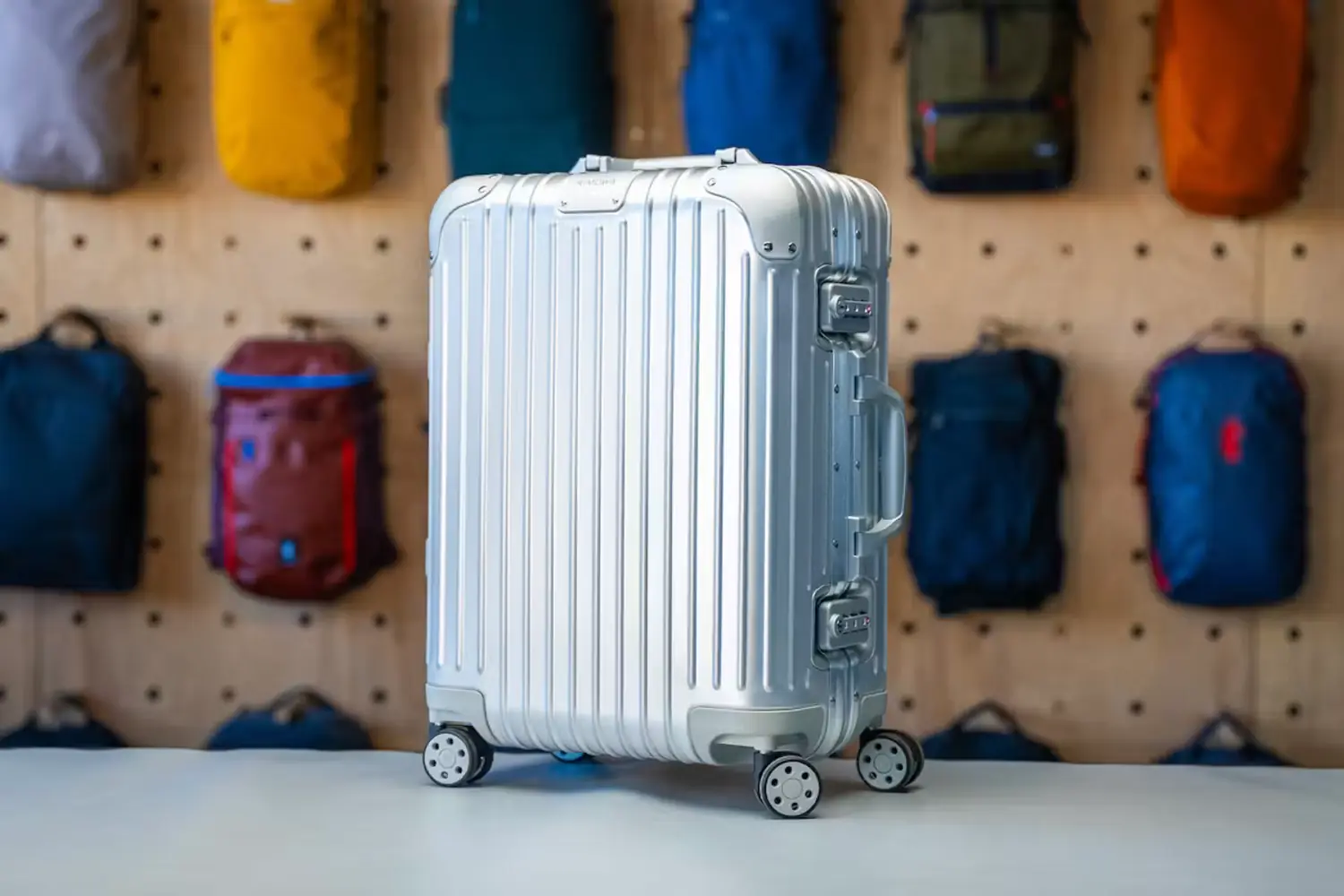
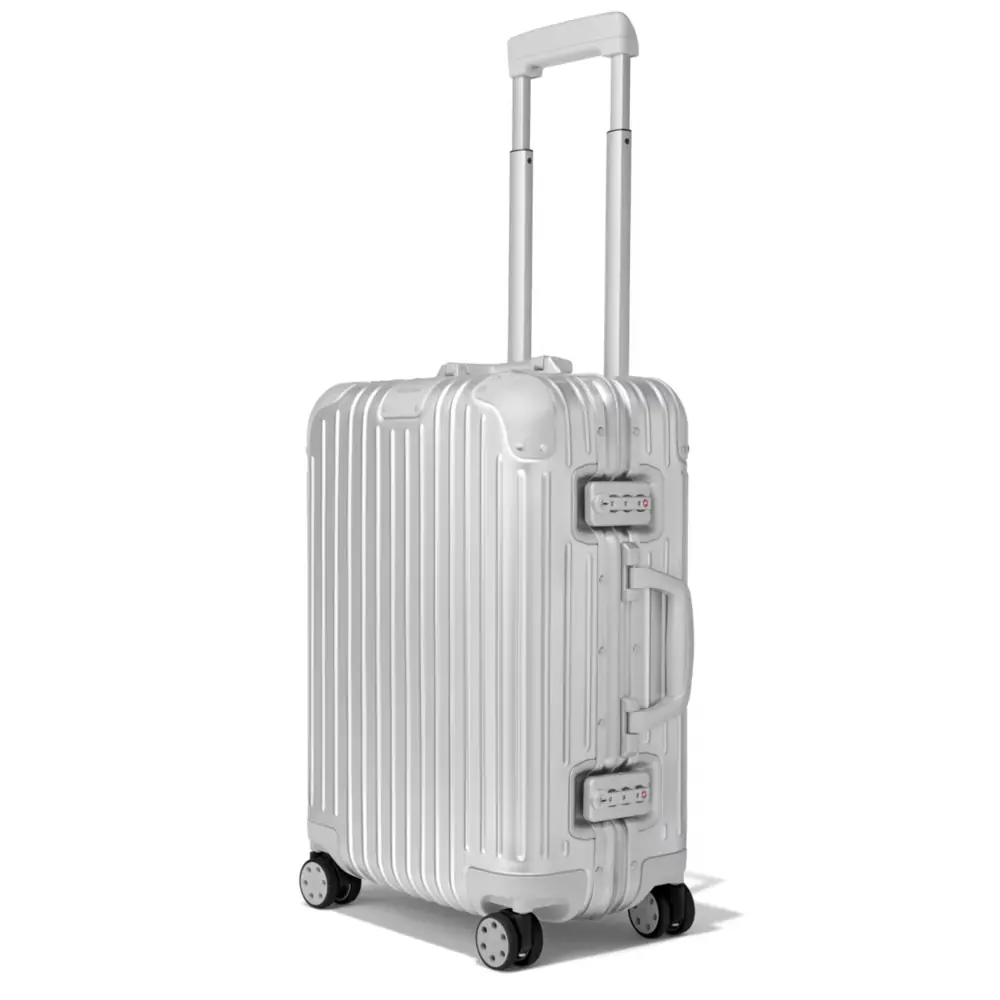
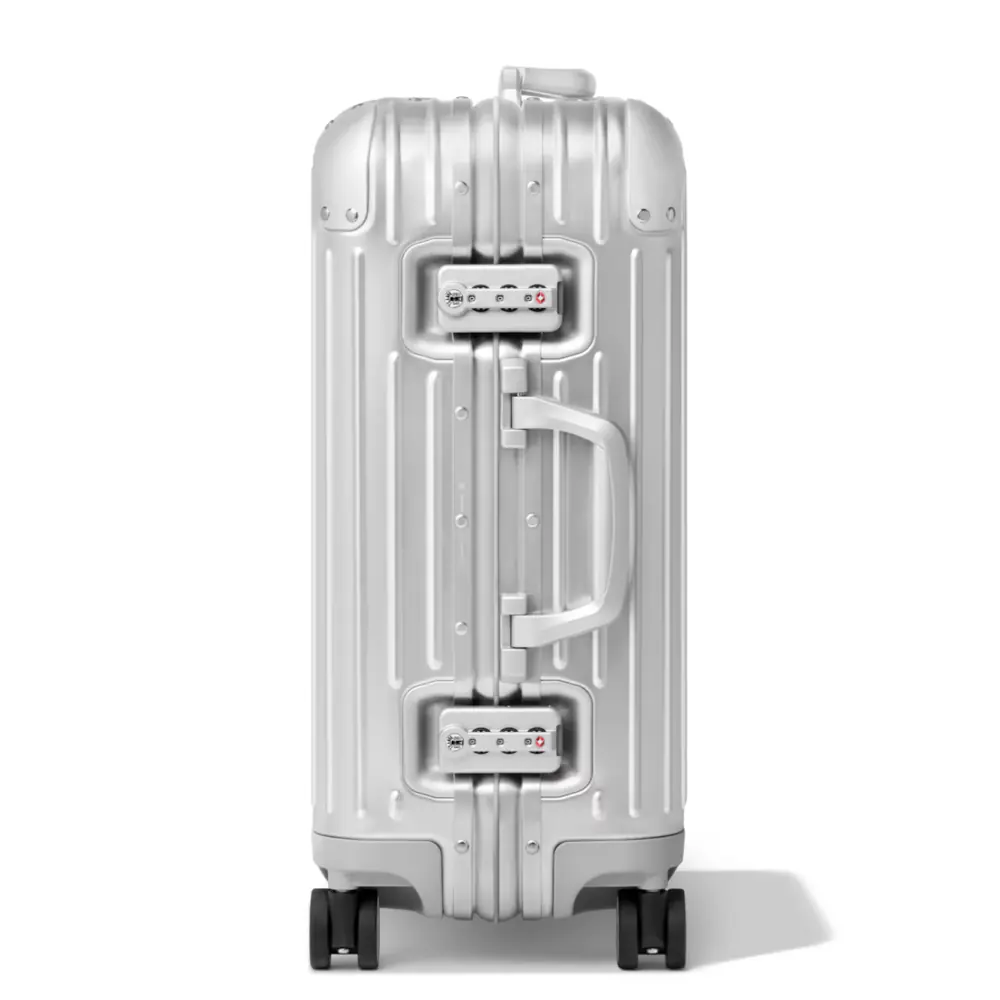
The first thing you register is the weight in the hand — roughly 4.3kg empty, which is frank and unfashionable for a 35-litre cabin case. Lift it onto a luggage rack and you feel every gram. Yet the moment it is upright on its wheels, that mass reorganises itself into something that reads as substance rather than burden. The anodised aluminium shell, with its signature parallel grooves, has a cool, faintly satin texture that warms slowly to the touch. Our test piece was the Titanium, a champagne-adjacent grey that flatters far more than the photographs suggest; the Silver is the purist’s choice and the Black the most discreet, though black aluminium shows its first scuffs soonest.
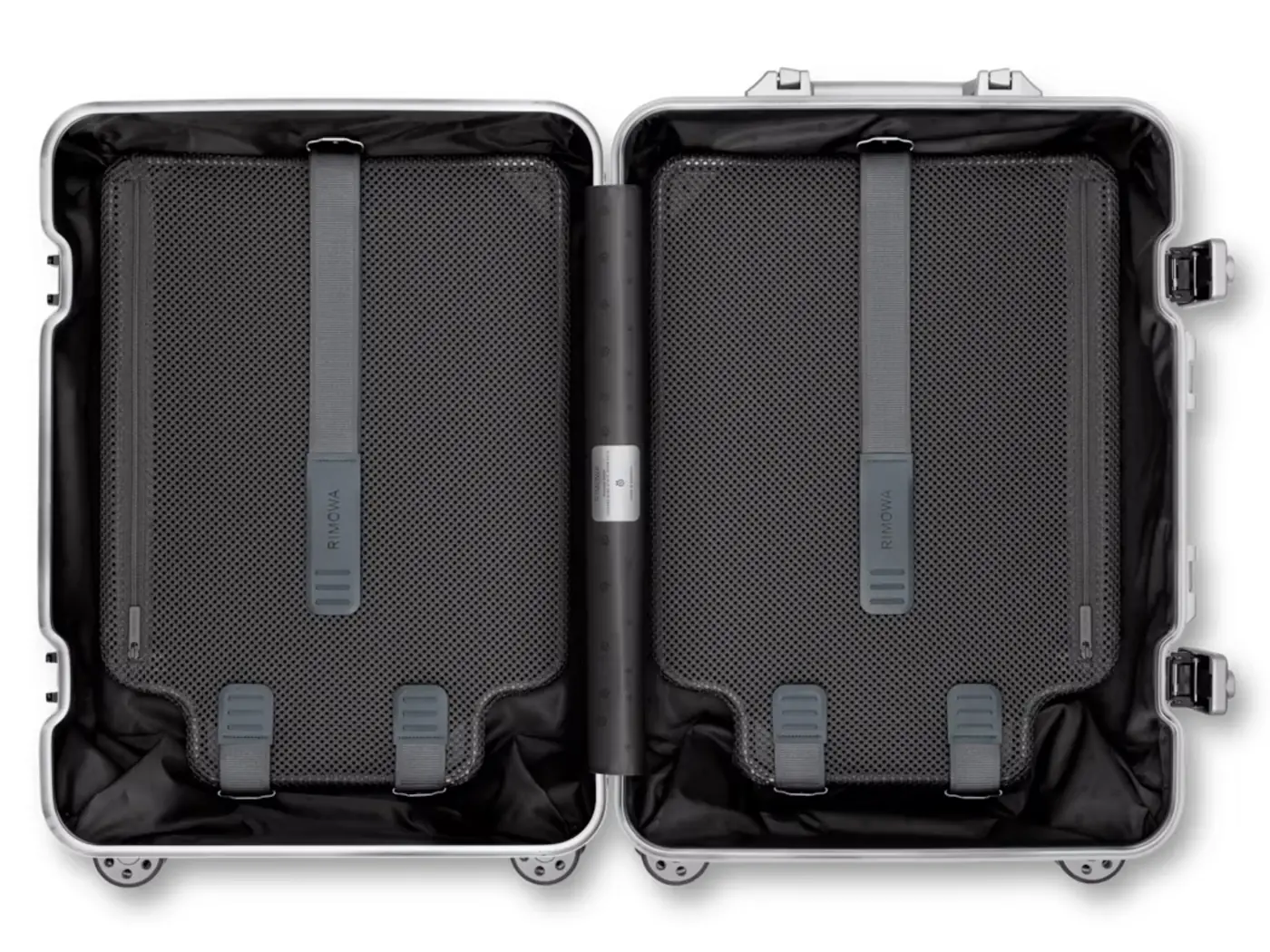
It is the small mechanisms that justify the outlay. The hinges move with a damped, deliberate weight; the TSA-approved locks engage with a confidence that cheaper combination dials never manage. There are no zips to fail — the two shells clamp shut along the full perimeter, and you close the case with both hands, a small ritual that makes packing feel considered rather than crammed. Inside, the flex dividers and compression straps are honest and uncomplicated, with none of the over-padded theatre some rivals use to disguise thin construction.
Set down beside a holdall at a hotel desk, it neither shouts nor hides. The aluminium catches ambient light without glare, and the proportions — 55 by 40 by 23 centimetres — are squared and architectural rather than bulbous. It is the rare object that looks more correct the more worn it becomes, and that single quality reframes everything that follows.
The Travel Field Test
We took it to Lisbon in April, which is to say we took it deliberately somewhere unkind to wheels. The Alfama district is a near-vertical lattice of cobbles and tram tracks, and a four-wheel cabin case is, on paper, the worst possible companion for it. Dragged on two wheels up the Rua de São Tomé, the Original Cabin behaved better than its weight implied; the multiwheel system has enough diameter and bearing quality to ride the gaps between setts rather than snagging in them, and the telescopic handle never developed the wristy wobble that betrays lesser cases under sideways load. It is not effortless — nothing 4.3kg loaded with a week of clothes is effortless on a 1-in-5 gradient — but it is composed.
The contrast came the following morning across the polished floor of the airline lounge, where the same case simply vanished beneath the hand and tracked dead straight at a fingertip’s push. This is the environment the Original Cabin was truly built for, and it glides through it with a silence that makes you understand the price. Lifted into an A320 overhead bin, the squared shell used the available space honestly; we have owned softer cases that claim cabin dimensions and then refuse to go in, and the rigid aluminium box never plays that trick.
The unglamorous test came at the end. A baggage handler in Lisbon, despite the cabin tag, gate-checked it on a full flight, and it returned with two fresh dents along one grooved edge and a long graze across the lid. A leather or fabric case would have looked wounded; the aluminium looked, if anything, more itself. Those marks are now permanent, and within a fortnight I had stopped seeing them as damage and started reading them as record — which is precisely the relationship the material is designed to provoke.
The Render & Character
What the Original Cabin actually delivers, beyond storage, is a particular kind of confidence at the friction points of travel. On a long-haul transit through Doha — three security checks, a lounge, a buggy ride and a 90-minute gate dash — the case never once demanded management. It rolled, it stowed, it locked, and it did all of it without the small anxieties (a sticking zip, a wheel shimmy, a handle that won’t seat) that quietly tax you across a travel day. The lifetime guarantee sits behind all of this as a kind of psychological underwriting: you stop treating the object as precious and start treating it as a tool, which is when it begins to earn back its cost.
The patina is the heart of its character. Where soft luggage degrades — fraying, sagging, going grey at the corners — aluminium accrues. Every dent is geographically specific; ours now carries Lisbon in its lid. Owners either understand this instinctively or never will, and if the prospect of a scuffed £1,070 case makes you wince, this is the wrong purchase and no review should talk you into it. The charm is inseparable from the vulnerability.
Practically, the 35-litre capacity is genuine but disciplined; the rigid shell will not over-stuff the way a fabric case forgives, so this is a four-day case packed well or a relaxed weekend, not a fortnight crammed. That constraint is, in its way, part of the appeal — it imposes the editing that good travel rewards.
The Ledger
What we loved
- A genuine design icon that reads as quietly luxurious at any hotel desk
- Zipless aluminium shell and damped TSA locks feel built to outlast decades
- Glides effortlessly on hard floors; handle and wheels stay composed under load
- Lifetime guarantee turns a precious object into a usable everyday tool
Worth noting
- Heavy for the class at ~4.3kg — you feel it on stairs and in overhead bins
- Dents and scuffs readily; the patina is only charming if you want it to be
- A serious £1,070 investment that most travellers genuinely do not need
How we tested
We buy or borrow every product we review and put it through real journeys rather than a press loft; this case was carried through Lisbon’s old town, a Doha long-haul transit, and the unremarkable churn of weekday airports over several months, and was gate-checked, dropped and over-packed in the ordinary course of travel. Affiliate links, where present, never shape the verdict — the dents on our test piece are real and so is the conclusion.
Buy the Original Cabin if you are a frequent short-haul or carry-on traveller who wants a single, repairable case to live with for a decade and who reads wear as character rather than damage. Skip it if you prioritise lightness, pack heavy, or would mourn the first scratch — a polycarbonate case at a third of the price will serve you better and bother you less. For the right owner, this remains the reference standard, weight, cost and all.
Featured in The Best Premium Carry-On Luggage
