Destination Guide
Highlights of Vietnam
Karst bays and lantern towns, rice terraces and the world's best street food — a slow, opinionated guide to a country best travelled two regions at a time.
The junk boat slips its mooring before the other cruisers wake, and for an hour Ha Long Bay belongs to no one: limestone towers standing in the mist, the water the colour of jade and glass, a single fishing skiff working the shallows. Vietnam rewards this kind of early hour, because by mid-morning the day boats arrive in convoy and the spell breaks. The country is having its moment — and the art of travelling it well is knowing where the moment hasn’t yet curdled into a queue.
This is a destination guide written the way we like to travel: slowly, region by region, with a strong point of view and a willingness to say when something has been loved past the point of pleasure.
-
Dawn on Ha Long or Lan Ha Bay
An overnight boat among the karsts — sail from quieter Lan Ha to dodge the crowds.
-
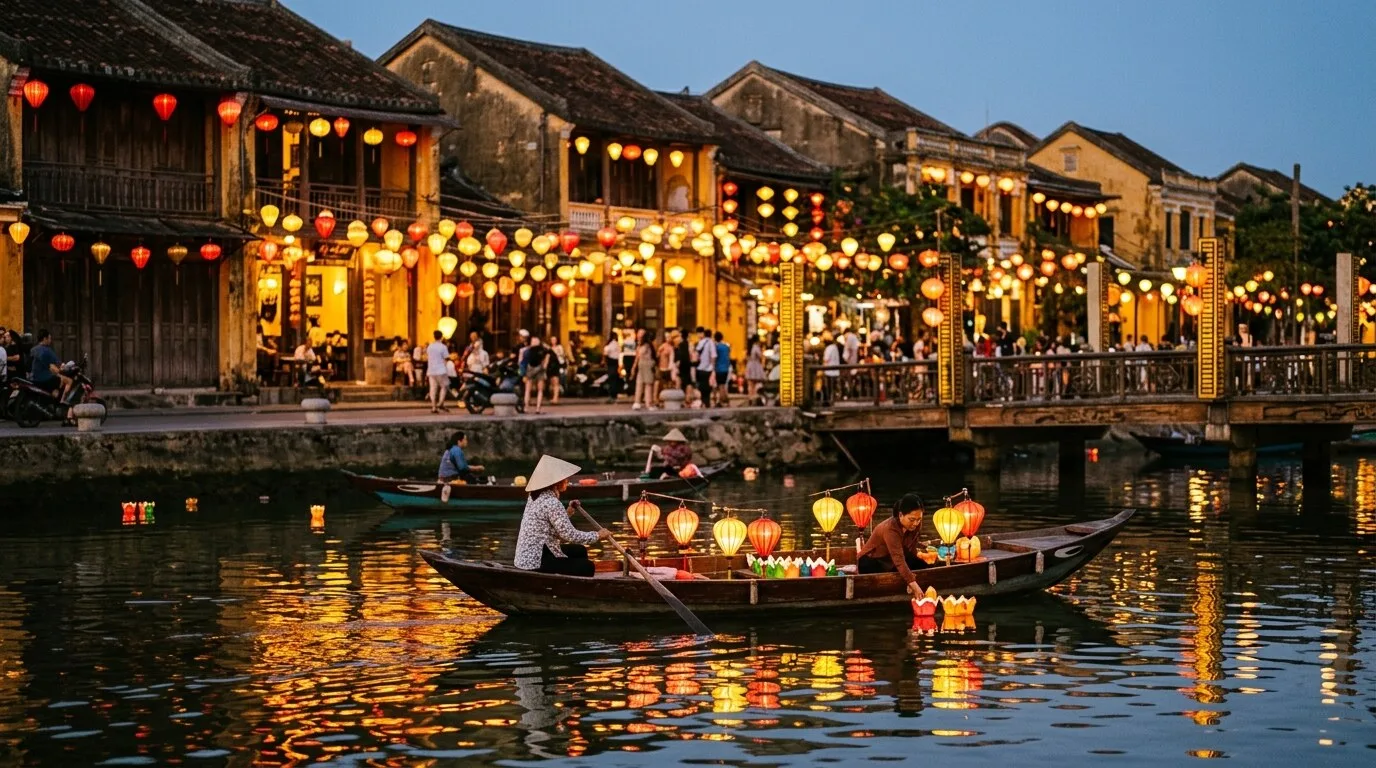
Hoi An after dark
The lantern-lit old town and the river, best in the hour the day-trippers leave.
-
The rice terraces of Sapa
Trek between Hmong and Dao villages, greenest in the weeks before harvest.
-
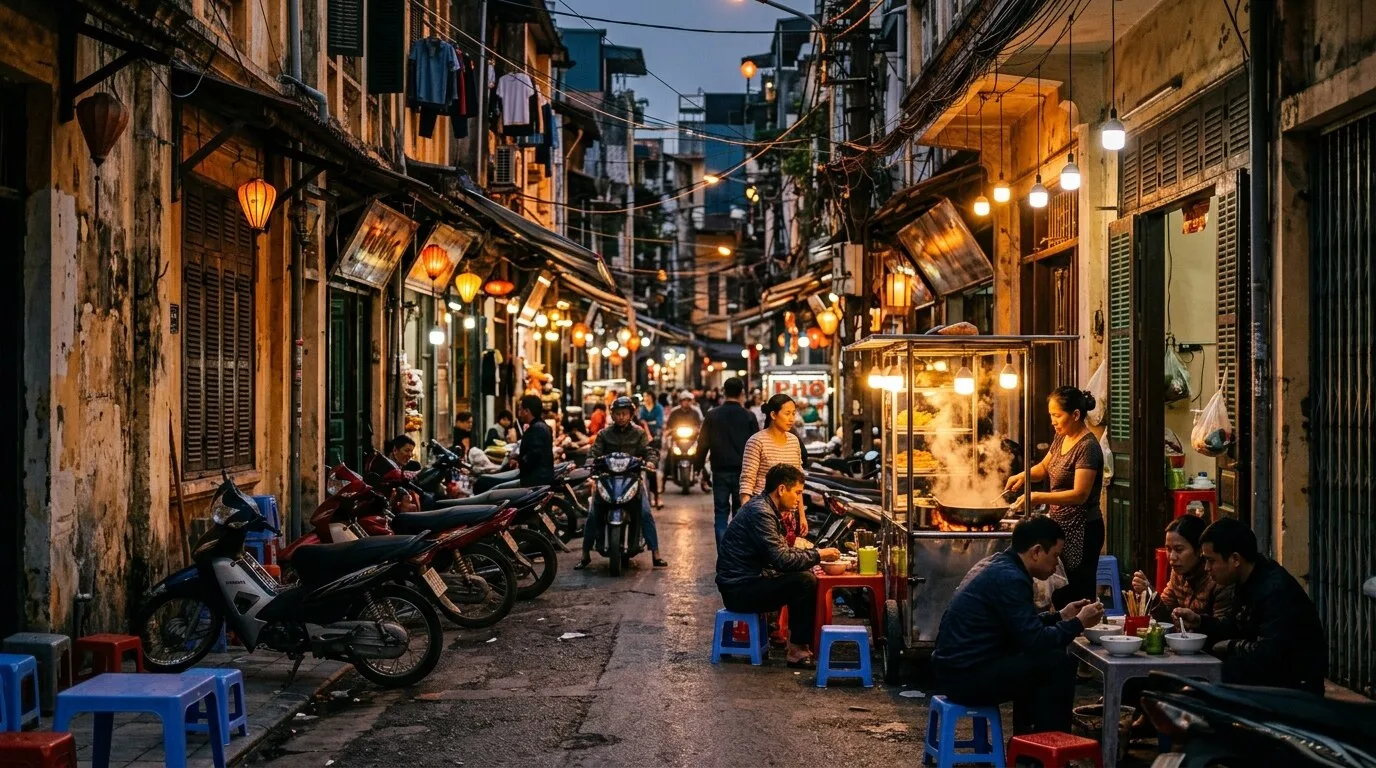
Street food, north to south
Hanoi’s bun cha, Hue’s bun bo, a southern banh mi — the real itinerary is edible.
-
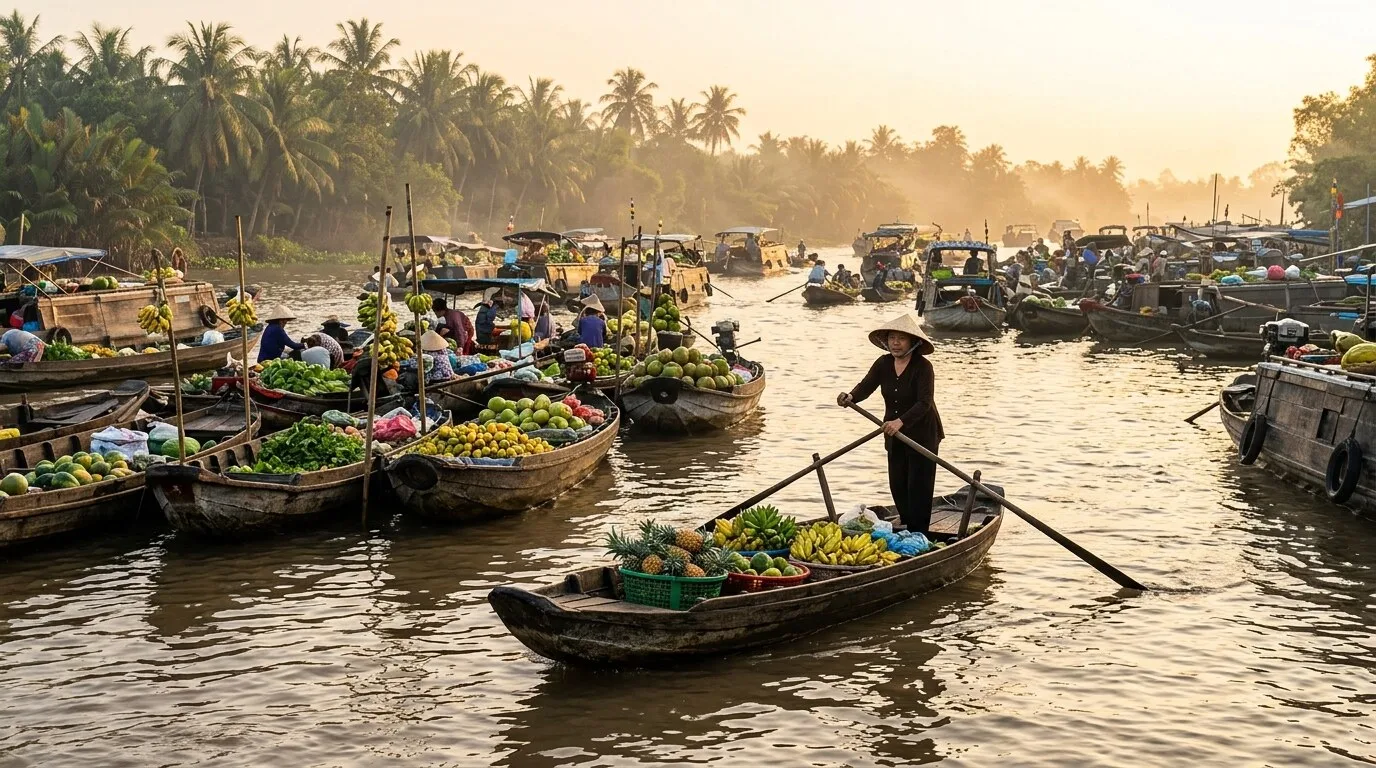
The Mekong by sampan
A floating market at first light, then the backwaters the big boats cannot reach.
Three countries in one
Vietnam is really three countries wearing one flag, strung out over more than 1,600 kilometres of coast, and the single most useful thing to understand before you book is that its weather runs on different clocks. A few honest notes:
- The seasons are regional, and they disagree. When the north is cool and clear, the central coast can be flooding; when the centre is at its beach-perfect best, the north is sweating. Plan around the region, not the calendar.
- Don’t try to do all of it. The classic mistake is Hanoi-to-Saigon in ten days. Choose two regions, fly between them, and travel each slowly.
- The famous places earn their fame — and their crowds. Ha Long, Hoi An and the Cu Chi tunnels are worth seeing; they are also busiest at midday. The fix is almost always timing, not avoidance.
- The roads demand respect. Traffic is the real hazard here, more than any scam — see the note further down before you rent a motorbike.
For official background on regions, festivals and current entry rules, the national tourism board’s Vietnam.travel is the most reliable starting point.
The north: Hanoi, Ha Long and Sapa
The north is Vietnam at its most layered — a thousand years of history in Hanoi, the postcard seascape of Ha Long, and the rice-terraced mountains along the Chinese border. It is also the region with the most rewarding cool season, roughly November to April.
Hanoi
Hanoi is a city to walk and to eat. The Old Quarter’s thirty-six guild streets still loosely keep their trades, the coffee is strong and often improbable — egg coffee is the one to try — and the street food is a reason to visit in itself. Give a morning to the Temple of Literature and the quiet around Hoan Kiem Lake, an afternoon to the Imperial Citadel, and your evenings to a low plastic stool and a bowl of bun cha. For a grand base with genuine history, our review of the Sofitel Legend Metropole Hanoi covers the colonial-era landmark that has hosted everyone from Graham Greene to visiting heads of state.
Ha Long and Lan Ha Bay
The bay is the set-piece, a UNESCO World Heritage seascape of nearly two thousand limestone islets. It is also heavily sailed, and a bad operator will moor you in a floating traffic jam. Two things make the difference: stay overnight rather than day-tripping, and sail from Lan Ha Bay, the quieter southern extension, where the same karst scenery comes with a fraction of the boats. Late October to December usually brings the clearest air and calmest water.
Sapa and the far north
Sapa is rice-terrace country, where the paddies stack up the valleys in green and gold and the Hmong and Dao communities still farm them by hand. Sapa town itself has been built up hard and is best treated as a trailhead rather than a destination; the reward is a guided walk out to the villages and a night in a homestay or a quieter lodge. The terraces are at their most photogenic in the weeks before the September harvest — which is also the tail of typhoon season, so keep your plans flexible.
The centre: Hue, Hoi An and Da Nang
Central Vietnam holds the country’s imperial past and its prettiest old town, and its weather runs opposite to the north: the dry, beach-worthy months are roughly February to August, while October and November bring the heaviest rain and the real flood risk.
Hue
Hue was the seat of the Nguyen emperors, and the Citadel and the royal tombs scattered along the Perfume River are the most atmospheric history in the country. It rewards a slow day and a bicycle. The riverside Azerai La Residence, the former French governor’s residence, is our pick for a stay that matches the city’s unhurried mood.
Hoi An
Hoi An is the postcard — a UNESCO-listed trading port of ochre shophouses, tailors and, after dusk, thousands of silk lanterns reflected in the Thu Bon river. It is also the most visited town in Vietnam, and by day the old quarter can feel like a film set with the crowds to match. Go early or, better, in the evening once the tour buses have left; let yourself get lost in the back lanes. The beach is a short cycle away, and for a serious stay the Four Seasons Resort The Nam Hai sets the standard on this coast.
Da Nang and around
Da Nang is the modern counterpoint — a long beach, the Marble Mountains, and the cliff-top InterContinental Danang Sun Peninsula on the Son Tra headland. The much-photographed Golden Bridge, held up by giant stone hands at Ba Na Hills, is genuinely striking and genuinely a theme park; go knowing that, and early. Inland, the caves of Phong Nha-Ke Bang — including Son Doong, the largest cave on earth — are the country’s great adventure for those who plan ahead.
The south: Ho Chi Minh City and the Mekong
The south is warm year-round, with a reliable dry season from December to April. Ho Chi Minh City — Saigon to most who live there — is the country’s engine: faster, richer and more outward-looking than Hanoi.
Give it the War Remnants Museum, which is sobering and essential; the faded grandeur of the Central Post Office and Notre-Dame; and an evening on a rooftop watching the motorbike tide below. The Reverie Saigon and the Park Hyatt Saigon are the two addresses we’d book. The Cu Chi tunnels make a strong half-day trip, but go first thing to beat the coaches.
The Mekong Delta
Two hours south, the Mekong is a different rhythm entirely — a watery world of rice, fruit orchards and floating markets. The Cai Rang market near Can Tho is the real thing, and it happens at dawn; by the time most day trips arrive from Saigon, the trading is over. Stay a night in the Delta, hire a sampan, and slip into the narrow backwaters the larger boats cannot follow.
The rice terraces and the slow north
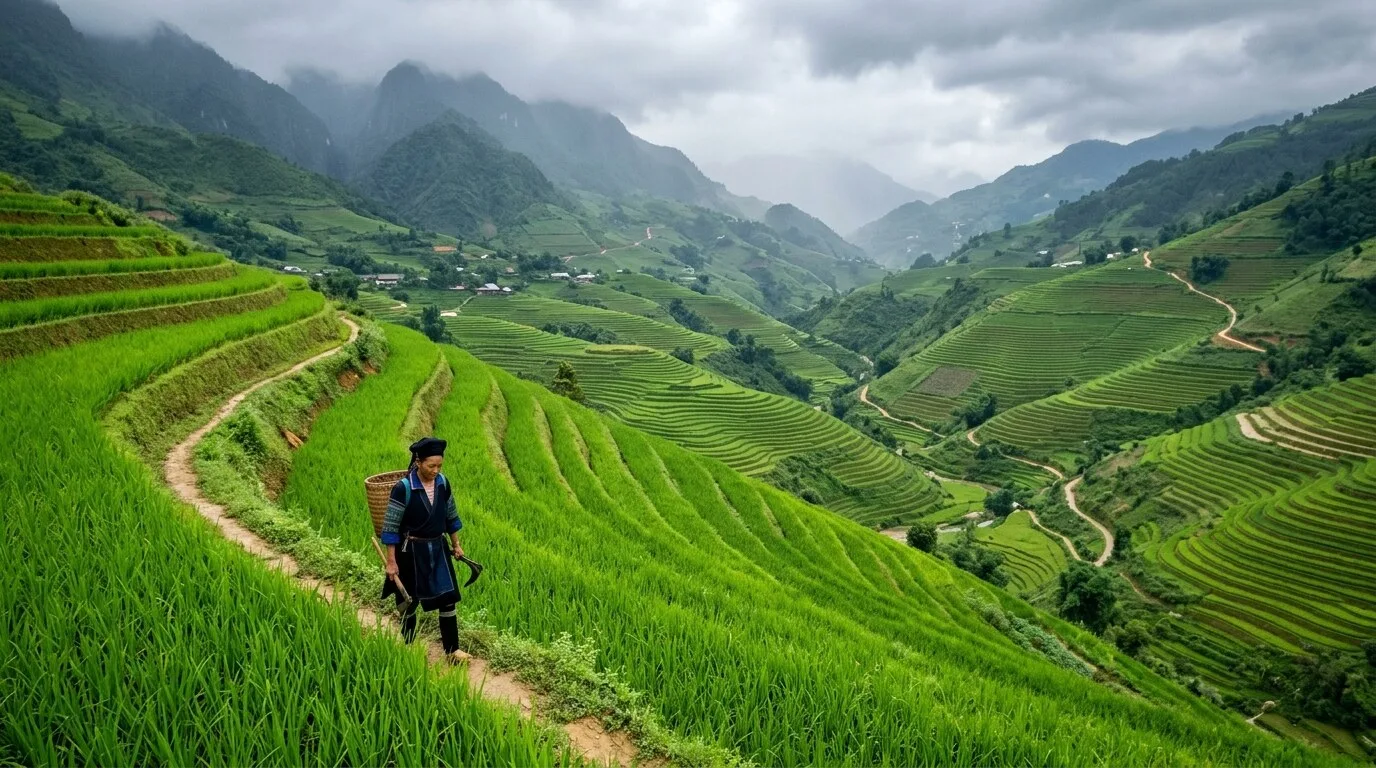
If you have the time, the mountain circuits beyond Sapa — Mu Cang Chai, the Ha Giang loop — are where northern Vietnam keeps its quiet. These are multi-day journeys on serious roads, best done with a driver, and they reward the effort with terraced valleys almost empty of other travellers.
Eating your way through Vietnam
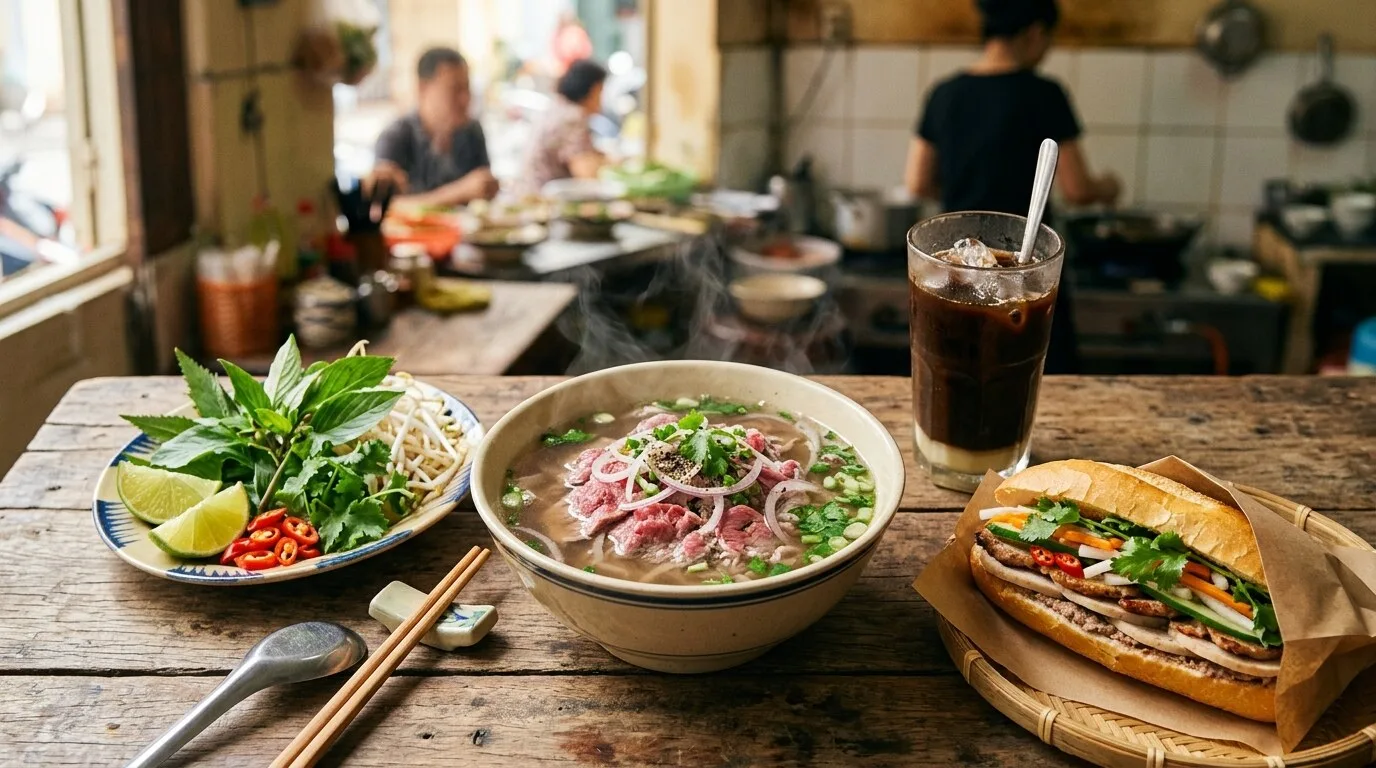
It is fair to plan a trip here around the table. The food changes as you travel: the north favours subtle, herb-led broths and the original pho; the centre, around Hue, is bolder and spicier, built on dishes like bun bo Hue; the south is sweeter, with more herbs and tropical fruit. Eat where the locals queue, start with breakfast pho and a banh mi, and treat Vietnamese coffee — thick, sweet, over ice — as a daily ritual rather than an occasional treat. A half-day cooking class in Hoi An or Hanoi is among the best-value things you can do.
Visas, when to go and getting around
Vietnam now offers an e-visa to citizens of every country — valid up to 90 days, single-entry for about US$25 or multiple-entry for US$50 — while many UK and EU nationals get a 45-day visa-free stay. Apply only through the official government portal (evisa.gov.vn), not a paid agent.
On timing, the regional split is the whole game: the north and the deep south are best in their dry, cooler months (roughly November–April), while the central coast around Hue and Hoi An is most reliable from February to August. If you must travel in October or November, weight your trip towards Hanoi and Saigon and keep the central coast short.
Traffic is the genuine risk in Vietnam, not crime. The motorbike density in Hanoi and Saigon is overwhelming, and tourist motorbike accidents are common. Cross the road slowly and steadily so riders can flow around you, and think hard before renting a bike yourself — only ride if you are experienced, licensed and insured.
Getting between regions is easiest by air: domestic flights are cheap and frequent between Hanoi, Da Nang and Ho Chi Minh City. The reunification railway is slower but a pleasure for its own sake, especially the coastal Hai Van Pass leg between Hue and Da Nang. In the cities, the Grab app — for cars and motorbike taxis alike — is cheaper and less fraught than negotiating a fare. Allow more time than the map suggests; the distances here are long and the roads unhurried.
The short version
Vietnam is too much country to swallow whole, and the travellers who try come home tired rather than charmed. Choose two regions, fly between them, and give each its mornings: a temple before the heat, a slow lunch, a boat at dusk, a bowl of something steaming on a street corner. Time it to the region rather than the calendar, and the country gives you its best — which is still, for now, more than its growing fame would suggest.
Frequently asked questions
What are the best things to do for first-time visitors?
Pair the north — Hanoi and an overnight cruise on Ha Long or Lan Ha Bay — with central Vietnam for Hoi An and Hue, then fly home from Da Nang or add a few days in Saigon and the Mekong. That covers the country’s defining experiences without a punishing pace.
How many days do you need?
Ten to fourteen days lets you do two regions properly, allowing for the flights between them. Two weeks is the comfortable minimum if you want to include both the north and the south.
Do I need a visa for Vietnam?
Most visitors do, but it is easy: Vietnam offers an e-visa to all nationalities, valid up to 90 days, for about US$25 (single entry) or US$50 (multiple). Many UK and EU citizens also qualify for a 45-day visa-free stay. Apply only through the official government portal.
When is the best time to visit?
It depends on the region. The north and far south are best in their dry months, roughly November to April; the central coast around Hue and Hoi An is most reliable from February to August. October and November bring the heaviest rain and flood risk to the centre.
Is Vietnam too crowded now?
The headline sights — Ha Long, Hoi An, the Cu Chi tunnels — are genuinely busy at midday, but the crowding is a matter of timing. Go early or late, sail from quieter Lan Ha rather than Ha Long, and the country still feels wonderfully unhurried.
How do you get around?
Fly between the main regions (Hanoi, Da Nang, Ho Chi Minh City) to save time; take the coastal train for the scenery where you can; and use the Grab app in the cities. Renting a motorbike is best left to experienced riders given the traffic.
What should I eat?
Start with pho and banh mi, then chase the regional specialities — bun cha in Hanoi, bun bo Hue in the centre, fresh herbs and seafood in the south — and drink the iced coffee daily. Eating where locals queue rarely steers you wrong.
Where to Stay
The stays we’d book in Highlights of Vietnam.
Luxe & Found
More from Highlights of Vietnam, in your inbox.
New openings, fresh reviews and where we’d go next. One email a week.